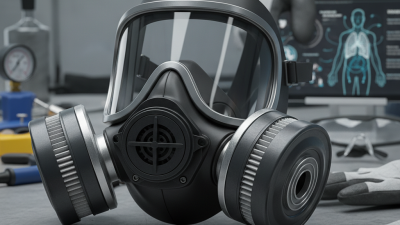
2025 Top Full Face Respirator Mask Benefits Features and Buying Guide
In a world increasingly aware of the importance of personal protective equipment (PPE), the full face respirator mask has emerged as a critical component in various industries, including healthcare, manufacturing, and hazardous material handling. According to the U.S. Bureau of Labor Statistics, occupational hazards are a significant concern, with around 2.8 million nonfatal workplace injuries and illnesses reported in 2019 alone. Among these, respiratory conditions comprise a notable portion, emphasizing the need for effective respiratory protection.
Full face respirator masks offer enhanced protection by covering the entire face, thus safeguarding the wearer’s eyes, nose, and mouth from harmful airborne contaminants. A recent study published in the “Journal of Occupational Health” suggests that utilizing full face respirators can reduce potential exposure to hazardous substances by up to 95%, providing superior filtration and safety compared to half masks. This article will explore the numerous benefits and features of full face respirator masks, alongside a comprehensive buying guide to help individuals and organizations make informed decisions about their respiratory protection needs.
Benefits of Using Full Face Respirator Masks in 2025
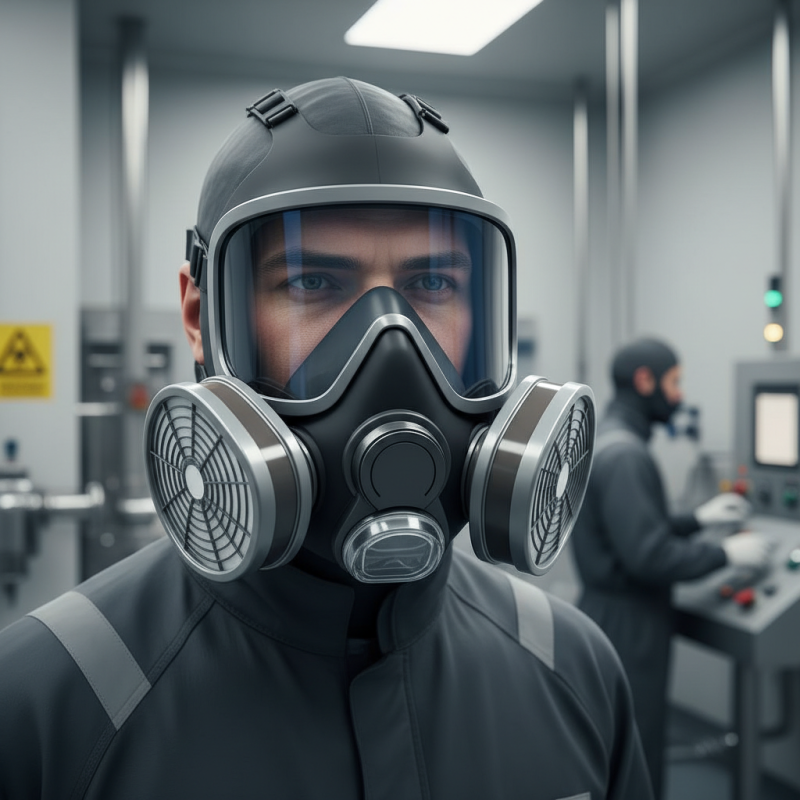
As we move into 2025, the importance of full face respirator masks has become increasingly evident, especially in environments where exposure to hazardous materials or airborne contaminants is a significant concern. The most prominent benefit of these masks is their comprehensive protection; they cover both the nose and mouth, as well as the eyes, ensuring that users are safeguarded from particles, gases, and vapors that could lead to serious health issues. According to recent industry data, the use of full face respirators can reduce the risk of respiratory illnesses by over 80% in hazardous work environments, highlighting their effectiveness.
Furthermore, many modern full face respirator masks come equipped with advanced filtration systems that significantly enhance air quality for the wearer. These systems are designed to filter out harmful pollutants and ensure that the air inhaled is clean and safe. Research shows that with the rise of industrial activities and environmental challenges, the demand for adequate respiratory protection has surged, leading to an array of options available in the market today.
Tips: When selecting a full face respirator mask, ensure it is compatible with the specific hazards you may encounter. Always check for proper fit and comfort, as an ill-fitting mask can compromise protection effectiveness. Regular maintenance, including filter changes and thorough cleaning, will also enhance the longevity and performance of your respirator.
Key Features to Look for in a Full Face Respirator Mask
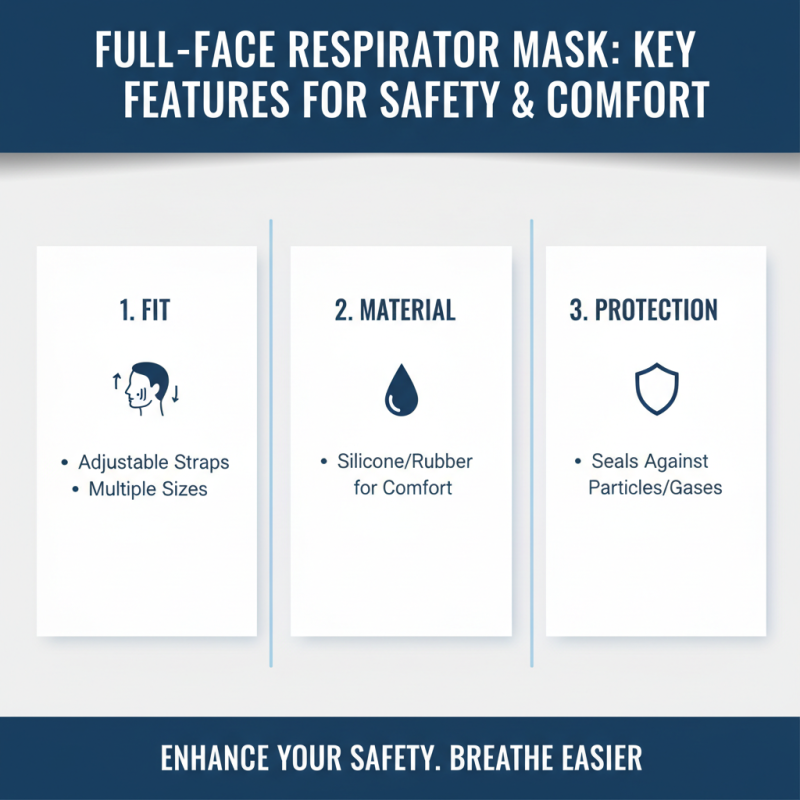
When selecting a full face respirator mask, understanding the key features can significantly enhance safety and comfort. One crucial aspect is the fit of the respirator. A proper fit ensures that the mask seals tightly against the face, preventing the ingress of harmful particles or gases. Look for models that offer adjustable straps and multiple sizes to accommodate various face shapes. Additionally, models equipped with silicone or rubber materials can provide greater comfort during extended wear.
Another important feature is the filter compatibility. Full face respirators should be equipped with high-efficiency particulate air (HEPA) filters or specific cartridges designed for the intended use, whether it be for dust, fumes, or organic vapors. Users should verify that the respirator mask allows for easy filter replacement and access, ensuring that maintenance is straightforward. Lastly, consider additional functionalities such as a panoramic visor for enhanced visibility and scratch-resistant coatings, which can improve the overall user experience and safety while wearing the mask.
Top Brands and Models of Full Face Respirator Masks for 2025
In 2025, the demand for full face respirator masks continues to rise, driven by the increasing need for personal protective equipment in various industries, including healthcare, manufacturing, and emergency services. According to a report by the Global Market Insights, the full face respirator market is projected to reach $4.5 billion by 2026, with a compound annual growth rate (CAGR) of 7.2% from 2020 to 2026. This growth is largely attributed to heightened awareness of air quality and occupational hazards, paired with stringent regulations pertaining to worker safety.
When considering the top models of full face respirator masks for 2025, several features emerge as critical for users. Key attributes include superior fit and comfort, which enhance prolonged wear without fatigue, and high-efficiency particulate air (HEPA) filters that provide optimal respiratory protection. The latest advancements in technology have also led to the integration of heads-up display (HUD) systems into some models, providing vital information in real-time while maintaining safety. Furthermore, ease of maintenance has become a focal point, with many masks offering replaceable components and simplified cleaning protocols to ensure longevity and optimal performance in demanding environments.
In terms of brand differentiation, the leading models are now characterized by user-friendly designs and enhanced scalability, facilitating their use across various applications from industrial settings to healthcare environments. As industries evolve, the emphasis on adaptive technology and user-centered design continues to shape the offerings in the full face respirator mask market, ensuring users find the right fit for their specific needs in 2025 and beyond.
2025 Top Full Face Respirator Mask Benefits Features and Buying Guide
| Model |
Key Features |
Benefits |
Price Range |
User Rating |
| Model A |
Anti-fogging, Adjustable straps |
Comfortable fit, Wide field of vision |
$150 - $200 |
4.5/5 |
| Model B |
P100 filters, Lightweight |
High filtration efficiency, Easy to wear |
$180 - $250 |
4.7/5 |
| Model C |
Full rubber seal, Double filter design |
Durable construction, Excellent seal |
$200 - $300 |
4.6/5 |
| Model D |
Panoramic visor, Easy cleaning |
Enhanced visibility, User-friendly |
$220 - $280 |
4.8/5 |
| Model E |
Voice amplification, Anti-scratch |
Clear communication, Scratch resistance |
$250 - $350 |
4.5/5 |
How to Properly Fit and Maintain Your Full Face Respirator Mask
Properly fitting and maintaining your full face respirator mask is essential for maximizing its protective capabilities and ensuring your safety in hazardous environments. To achieve a secure fit, start by selecting the correct size based on your facial dimensions. It's vital to perform a fit test, whether qualitative or quantitative, to ensure there are no leaks around the edges of the mask. When putting on the mask, adjust the straps evenly, ensuring that the mask sits snugly against your face without being overly tight, as this can cause discomfort and fatigue during extended use.
Regular maintenance of your full face respirator is equally important for its longevity and effectiveness. Begin by cleaning the mask after each use with mild soap and warm water, avoiding harsh chemicals that can degrade the material. Inspect the components, such as the straps, filters, and lenses, for wear and tear. Any damaged parts should be replaced promptly to maintain proper function. Additionally, store the respirator in a clean, dry place, away from direct sunlight and extreme temperatures, to prevent any deterioration when it's not in use. Adhering to these guidelines will ensure that your full face respirator remains a reliable safeguard against airborne hazards.
Essential Buying Guide for Full Face Respirator Masks in 2025
When considering a full face respirator mask in 2025, it is vital to understand both the benefits and essential features to make an informed purchase. According to a recent industry report by MarketsandMarkets, the global respiratory protection market is projected to reach $7.5 billion by 2026, reflecting a significant shift toward enhanced safety measures in various industrial sectors. Full face respirators provide a comprehensive barrier against airborne contaminants, offering advantages in protection, comfort, and visibility, which are critical for users in high-risk environments.
Key features to look for include a tight seal, a wide field of vision, and compatibility with various filter types. A study published by the National Institute for Occupational Safety and Health (NIOSH) emphasizes that masks with adjustable straps and multiple sizes are essential for achieving an effective fit, which is crucial for respiratory protection efficacy. Additionally, consider models equipped with integrated communication devices and anti-fog technologies, as these can enhance usability in demanding work conditions.
As workplace safety continues to evolve, selecting a full face respirator mask tailored to specific needs will be an invaluable investment in health and safety for workers across industries.