[wpml_language_selector_widget]

2026 Best Air Mask Types for Global Buyers?

Choosing the right air mask in 2026 requires more than comparing filter labels or online ratings. Global buyers face wildfire smoke, urban particles, workplace dust, and airborne infections. These hazards are different. Protection must match the exposure.

IQAir’s 2024 World Air Quality Report assessed 7,885 locations across 138 countries, regions, and territories. Only 17% of the monitored cities met the World Health Organization’s annual PM2.5 guideline. That guideline is 5 micrograms per cubic metre. The gap is significant. It also shows why basic fabric coverings may be inadequate during severe pollution events.

This guide will compare disposable filtering facepieces, reusable half-mask respirators, powered air-purifying respirators, and specialized pollution masks. It will examine filtration ratings, seal quality, breathing resistance, comfort, replacement costs, and certification systems. NIOSH approval, the European EN 149 standard, and other regional requirements should be checked carefully. A familiar logo is not proof of performance.

A practical detail matters: air can enter through a two-millimetre cheek gap. Poor fit can undermine an excellent filter. Aerosol scientist Dr. Linsey Marr has said, “The best mask is the one that fits well and that you will wear consistently.” That principle remains useful, although it is not the whole decision.

Buyers must also consider climate, facial shape, glasses, communication needs, and supply reliability. Some recommendations will be imperfect. Product claims can be confusing. Independent verification is still essential. A sensible choice protects breathing without creating false confidence.

2026 Best Air Mask Types for Global Buyers?

What Are Air Masks and How Are They Classified?

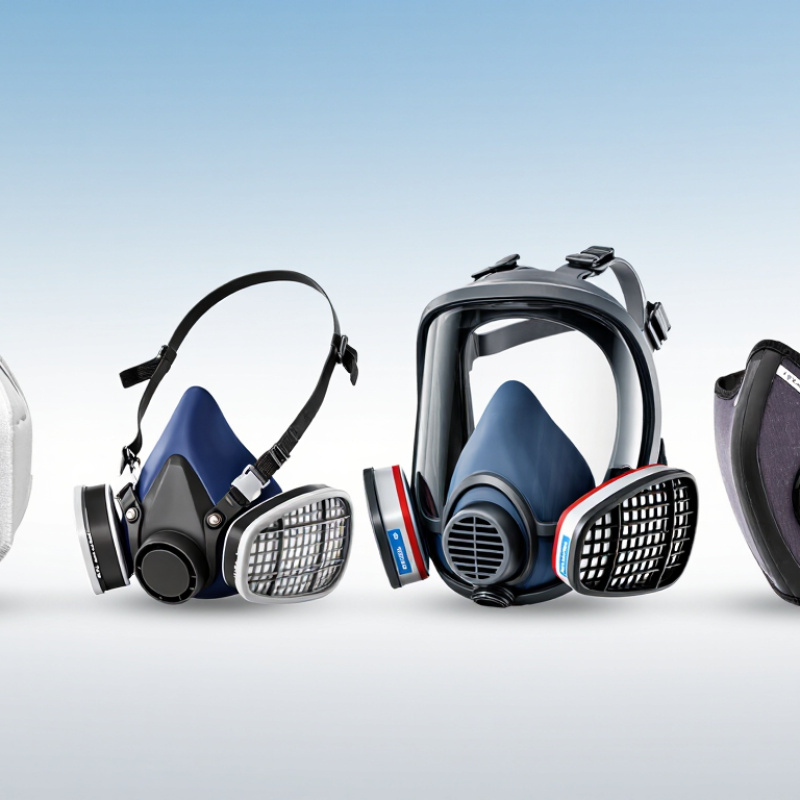
Air masks are wearable devices designed to reduce inhalation of particles, droplets, or selected airborne contaminants. They do not all provide the same protection. Classification usually depends on filtration method, face coverage, sealing design, and intended environment.

Disposable filtering masks capture particles through a filter layer. Their performance depends heavily on facial fit. Reusable elastomeric masks use replaceable filters and create a closer seal around the nose and mouth. Powered air-purifying respirators use a battery-powered airflow system, while supplied-air models receive clean air from an external source. These systems suit specialized workplaces and require careful training.

Masks can also be classified by protection level, such as particle filtration, gas and vapor filtration, or combined filtration. Buyers should check independent test results, filtration ratings, breathing resistance, and applicable local standards. A high rating cannot compensate for a poor seal. That detail is often underestimated.

Tips: Measure the wearer’s face, inspect straps and valves, and test comfort before regular use. Facial hair, glasses, sweat, and movement can affect fit. Replace damaged filters promptly. Storage matters too; dust and moisture can reduce reliability. No mask fits every person perfectly. Even experienced users sometimes choose the wrong type for changing conditions.ಿನ್ನೆ

Which Air Mask Types Suit Different Exposure Risks?

In 2026, choosing an air mask should begin with the exposure risk, not appearance. The World Health Organization reported that 99% of people breathed air exceeding its 2021 guideline for fine particles in 2019. For dust, smoke, pollen, and many airborne particles, a fit-tested particulate respirator is more suitable than a loose medical mask. N95-class protection filters at least 95% of airborne particles under laboratory conditions, while higher-rated reusable filters can offer greater filtration. However, filtration does not equal full protection. Poor fit can leave gaps around the cheeks and nose.

Chemical vapors require a different design. A reusable half-mask or full-face respirator with cartridges selected for the specific vapor may be appropriate, but particulate filters alone cannot remove gases. Full-face models also protect the eyes from irritating aerosols. For infectious droplets in clinical settings, medical masks can reduce splash and source emission, yet they may not seal tightly enough for fine aerosols. NIOSH guidance emphasizes proper selection, seal checks, and fit testing. Facial hair can interfere with sealing. That detail is often ignored.

Tips: Check the contaminant, concentration, humidity, and wearing time before purchase. Replace filters when damaged, dirty, difficult to breathe through, or used beyond the manufacturer’s schedule. Do not rely on a mask in oxygen-deficient or immediately dangerous environments; those situations require professional respiratory protection programs. WHO Global Air Quality Guidelines, 2021; NIOSH Respirator Selection Logic, 2004. I still see buyers choosing the highest filter rating automatically. That is not always the safest decision, because comfort and consistent fit determine real-world use.

How Do Global Filtration Ratings and Standards Compare?

For global buyers, “best” air mask depends on the rating system, test method, and face fit. WHO’s 2022 air-quality update reported that 99% of people breathe air exceeding its recommended pollution guideline. That statistic makes filtration claims important, but ratings are not interchangeable.

NIOSH classifies N95 respirators at 95% minimum filtration, while 99 and 99.97 classes provide higher tested performance. Under EN 149, FFP2 requires at least 94% filtration, and FFP3 requires at least 99%. China’s GB 2626 standard uses KN95 at 95% and KN100 at 99.97%. Australia’s AS/NZS 1716 system lists P2 at approximately 94% filtration. These figures describe laboratory tests, not guaranteed protection on every face. Leakage around the nose can reduce real-world performance sharply. The comparison is useful, but still imperfect.

Tips: Check the printed standard and certification details. Choose a size that seals without painful pressure. A fit check should show no air escaping near the eyes or cheeks. Replace a mask when it becomes wet, damaged, or difficult to breathe through. For smoke or fine particles, avoid relying on comfort alone. NIOSH and EN 149 tests use different procedures, so a higher number does not automatically mean universal superiority. Also, ear-loop designs may seal less consistently than headband designs, depending on the wearer and mask shape.

2026 Best Air Mask Types for Global Buyers

How Do Global Filtration Ratings and Standards Compare?

The chart compares the minimum stated filtration efficiencies of widely used respirator classifications. N95 and KN95 require at least 95% filtration, while FFP2, KF94, and P2 require at least 94%. FFP3 and N99 classifications require at least 99%. These values are rating thresholds rather than a complete measure of real-world protection; fit, leakage, breathing resistance, testing particles, and certification requirements also differ between standards.

Reference frameworks: U.S. 42 CFR Part 84, China GB 2626, Europe EN 149, Korea KMOEL-2017-64, and Australia/New Zealand AS/NZS 1716. Always verify current local certification and product fit.

What Fit, Comfort, and Reuse Factors Should Buyers Assess?

For global buyers, an air mask should fit the face before it impresses the specification sheet. NIOSH guidance states that facial hair, glasses, and deep wrinkles can interrupt the sealing area. A mask may filter well in laboratory testing, yet perform poorly during movement. Check the nose bridge, cheek pressure, and chin coverage. Then conduct a user seal check every time.

Fit affects comfort directly. OSHA’s respiratory protection data assigns an assigned protection factor of 10 to many half-mask air-purifying respirators, but only when they fit correctly and are used within a tested program.

Buyers should examine strap tension, breathing resistance, heat buildup, and speech clarity. A heavy mask becomes irritating after several hours. That matters.

Comfort is not a luxury. Reuse also needs careful judgment. CDC and NIOSH materials explain that disposable filtering respirators were not designed for unlimited reuse. Storage, moisture, visible soil, and handling can damage performance. Reusable models should have replaceable filters, washable facepieces, and clear inspection instructions.

ISO 16900 test methods also show why laboratory filtration cannot represent every real-world condition. A mask can pass a test and still be worn badly. That uncomfortable truth is often overlooked. Buyers should record fit-test results, replacement intervals, and worker feedback instead of trusting a single comfort claim. Safety requirements differ by country, so local occupational standards must be checked before purchasing.

How Can Buyers Verify Quality, Compliance, and Supply Terms?

2026 Best Air Mask Types for Global Buyers?

Global buyers should match mask design with exposure, climate, and wearing time. Filtering facepiece respirators suit short tasks and disposable workflows. Elastomeric models support repeated use, but cleaning control becomes essential. Powered air-purifying respirators offer comfort during longer shifts. They also require batteries, filters, and trained maintenance.

Quality verification must begin with the exact model number. Request the latest test report, certificate, product specification, and batch traceability record. Check whether the laboratory holds ISO/IEC 17025 accreditation. Confirm the claimed standard, such as EN 149 or NIOSH 42 CFR Part 84. The WHO 2021 air quality database reported that 99% of people lived with air exceeding guideline limits. That figure increases demand, but it does not prove every mask protects equally. Fit testing still matters. A perfect filter can fail around the cheeks.

Tips: Ask for production samples, not showroom samples. Inspect nose clips, strap strength, weld points, and filter layers. Record leakage observations during movement. Request inspection before shipment. Supply terms need equal attention. Define minimum order quantity, lead time, packaging, Incoterms, payment stages, defect limits, and replacement duties. Require written notice before material or factory changes. The OECD Due Diligence Guidance supports risk-based supplier checks, including documentation and traceability. Certificates can expire. Reports can describe another batch. Buyers should verify both. I have seen paperwork look complete while carton labels remained unclear. That weakness deserves correction.

2026 Best Air Mask Types for Global Buyers? - How Can Buyers Verify Quality, Compliance, and Supply Terms?

Buyer-oriented comparison of commonly traded respiratory protection categories

Mask Type Best-Fit Application Filtration and Protection Data Relevant Compliance Route Quality Verification Documents Supply Terms to Confirm Main Limitations
Disposable Filtering Facepiece Respirator
N95 FFP2 FFP3
Workplace dust, aerosols, smoke particles, and short-to-medium duration tasks where a close facial seal is achievable. N95: minimum 95% filtration efficiency for the applicable test aerosol under the relevant U.S. approval method.
FFP2: minimum 94% filtration efficiency under EN 149 testing.
FFP3: minimum 99% filtration efficiency under EN 149 testing.
Protection depends heavily on fit, correct donning, and leakage control.
NIOSH approval route EN 149 Destination-market rules ✓ Approval or certificate number searchable in the applicable official database
✓ Declaration of conformity and current technical documentation
✓ Lot number, production date, shelf life, and packaging artwork
✓ Independent laboratory report matching the exact model and configuration
✓ Fit-test information and user instructions
Confirm mask model, size, color, valve configuration, carton quantity, MOQ, production lead time, shipment terms, inspection standard, and replacement policy for failed lots. Generally single-use. Facial hair, poor sizing, glasses interference, moisture, and extended wear can reduce the seal. Not designed for oxygen-deficient or immediately dangerous atmospheres.
Medical or Surgical Face Mask
Procedure Mask Medical Use
Source control, splash resistance, and general medical or public-facing use where a tight respirator seal is not required. Performance is normally specified by bacterial filtration efficiency, sub-micron particle filtration efficiency, differential pressure, splash or fluid resistance, and microbial cleanliness. These masks are loose-fitting and are not equivalent to fit-tested respirators. ASTM F2100 EN 14683 Local medical-device rules ✓ Test report for the claimed performance level or type
✓ Biocompatibility and skin-contact assessment where required
✓ Fluid-resistance test when splash protection is claimed
✓ Sterility evidence only when the product is sold as sterile
✓ Medical-device registration or listing required by the destination market
Confirm medical or non-medical classification, sterilization status, ear-loop or tie configuration, packaging environment, shelf life, MOQ, delivery schedule, and applicable import documentation. Does not normally provide a tight facial seal and should not be selected as a substitute for a certified particulate respirator where inhalation protection is required.
KN95-Class Filtering Facepiece
GB 2626-2019 Non-Oil Aerosols
General particulate protection in markets that recognize the applicable Chinese respiratory-protection standard or accept it through an approved procurement route. The KN95 classification specifies a nominal 95% filtration efficiency level under the relevant test method. Fit, breathing resistance, exhalation-valve configuration, and total inward leakage must be assessed separately. GB 2626-2019 Destination-market acceptance ✓ Certificate and test report for the exact model
✓ Verification that the certificate issuer and laboratory are competent for the stated scope
✓ Product markings consistent with the declared standard
✓ Random batch testing for filtration and breathing resistance
✓ Traceability from shipment carton to production lot
Confirm whether the buyer's country accepts the standard, whether a local conformity assessment is required, and whether the quotation includes export packaging, inspection, documentation, and re-testing costs. A certificate alone does not prove every shipment is compliant. Counterfeit or mismatched reports are possible; the report model number, dimensions, photographs, and laboratory scope must match the supplied product.
Reusable Elastomeric Half-Mask Respirator
Replaceable Filters Reusable Body
Repeated industrial use, maintenance work, and environments where a durable facepiece and replaceable particulate or gas/vapor cartridges are preferred. Protection is determined by the facepiece, filter or cartridge type, assigned protection factor, fit testing, change-out schedule, and the contaminant. Particulate filters and gas/vapor cartridges are not interchangeable in function. NIOSH approval route EN 140 EN 143 / EN 14387 Local PPE rules ✓ Approval covering the complete facepiece and filter combination
✓ Compatibility list for cartridges and accessories
✓ Fit-test procedure and cleaning instructions
✓ Cartridge service-life or change-out guidance
✓ Material safety and repeated-use durability data
Confirm facepiece sizes, replacement-filter availability, filter interchangeability, spare-part pricing, shelf life of cartridges, minimum order quantities, and long-term supply commitments. Requires cleaning, inspection, storage control, and timely filter replacement. Facial hair can prevent an effective seal. Gas and vapor cartridges may become saturated without obvious warning.
Powered Air-Purifying Respirator
PAPR Powered Airflow
Long-duration work, higher comfort requirements, or applications where reduced breathing resistance is valuable and a battery-powered blower is permitted. Uses a blower, filter or cartridge, breathing zone interface, battery, and alarm system. Protection level varies by configuration and local approval; it must not be inferred from filter efficiency alone. NIOSH PAPR requirements EN 12941 / EN 12942 Electrical and battery rules ✓ Approval covering the complete configuration
✓ Airflow-rate verification and low-flow alarm test
✓ Battery runtime, charger, and replacement-battery documentation
✓ Filter compatibility and service-life instructions
✓ Cleaning, maintenance, and decontamination procedures
Confirm battery type, charging voltage, runtime under load, spare-part availability, warranty period, replacement-filter lead time, packaging for lithium batteries, and after-sales maintenance support. Higher purchase and maintenance cost. Battery failure, blocked filters, poor cleaning, or incorrect airflow can compromise protection. Not suitable for every hazardous-atmosphere scenario.
Reusable Textile or Community Face Covering
General Public Non-PPE
Low-risk public settings, comfort, and source-control applications where the product is not marketed or regulated as a respirator or medical mask. Filtration, breathability, fit, washing durability, and layer construction vary widely. There is no universal particulate-protection rating for all textile face coverings. Local consumer rules Voluntary test method Non-PPE labeling ✓ Clear statement that the item is not a certified respirator
✓ Test method, number of wash cycles, and performance after washing
✓ Fiber content, colorant, and skin-contact safety information
✓ Dimensional stability and seam-strength records
✓ Accurate care and replacement instructions
Confirm fabric composition, production capacity, color tolerance, size grading, wash-care labeling, packaging, MOQ, sampling charges, and inspection criteria for stitching and dimensions. Should not be represented as equivalent to a certified respirator unless the complete product has passed the applicable respiratory-protection requirements.
Buyer verification rule: Match the certificate, test report, product marking, photographs, packaging, and physical sample to the exact model and production configuration. Verify approval status through the relevant official or competent conformity-assessment source rather than relying only on a supplier-provided PDF.

Supply-term checklist for global RFQs: exact model and standard; product classification; MOQ; sample lead time; mass-production lead time; monthly capacity; Incoterm and shipping mode; payment terms; inspection standard; lot traceability; shelf life; packaging language; tariff code; export documents; warranty; replacement policy; and responsibility for destination-market registration. Standards and import requirements can differ by country and may change, so the buyer should confirm the latest applicable rules before purchase.