Top Benefits of Surgical Masks for Global Buyers?
Surgical masks have become essential in today's global landscape. They play a pivotal role in safeguarding public health. As we navigate through health crises, the demand for surgical masks has surged. Buyers worldwide are now recognizing their importance beyond just a medical setting.
The benefits of surgical masks extend to various aspects of daily life. They offer protection against airborne pathogens, ensuring safety for both the wearer and those around them. Enhanced filtration and fluid barrier properties make them effective in preventing virus transmission. Furthermore, surgical masks are designed for comfort, making them suitable for extended use.
However, it's important to acknowledge that not all surgical masks are created equal. Variability in quality can lead to unreliable performance. Buyers must be vigilant, seeking certified masks that meet recognized standards. Understanding the nuances of surgical mask types is crucial in making informed purchasing decisions. This awareness can enhance the protective measures we all seek to implement in our daily lives.
Advantages of Surgical Masks in Infection Control and Prevention
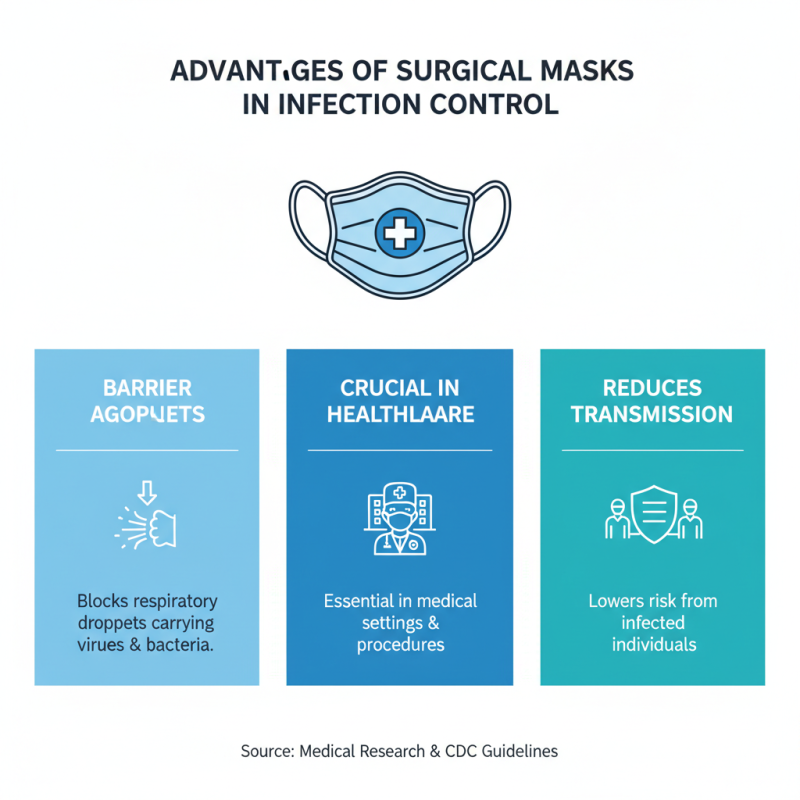
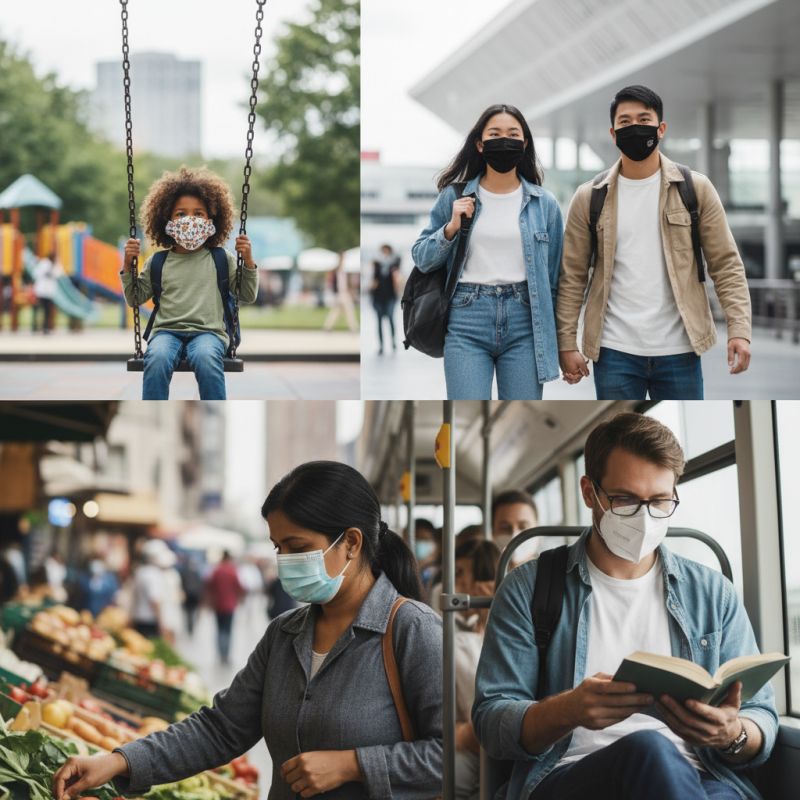
Surgical masks play a crucial role in infection control and prevention. They act as a barrier against respiratory droplets that can carry viruses and bacteria. This protective layer is vital in healthcare settings. Masks help reduce the risk of transmission from infected individuals, especially during medical procedures.
A significant advantage of surgical masks is their effectiveness in reducing cross-contamination. They are designed to filter out large particles, ensuring that both the wearer and those around them are safer. In crowded environments, wearing masks can significantly lower the chances of airborne infections spreading. However, relying solely on masks is not enough. They must be used alongside other preventive measures, such as hand hygiene and social distancing.
Despite their benefits, some challenges remain. Compliance can vary among individuals. Many forget to replace masks regularly, reducing their effectiveness. It’s essential to educate users on proper usage and disposal. Overall, while surgical masks are not a foolproof solution, they provide an essential layer of protection against infections in various settings.
Enhanced Safety for Healthcare Workers and Patients
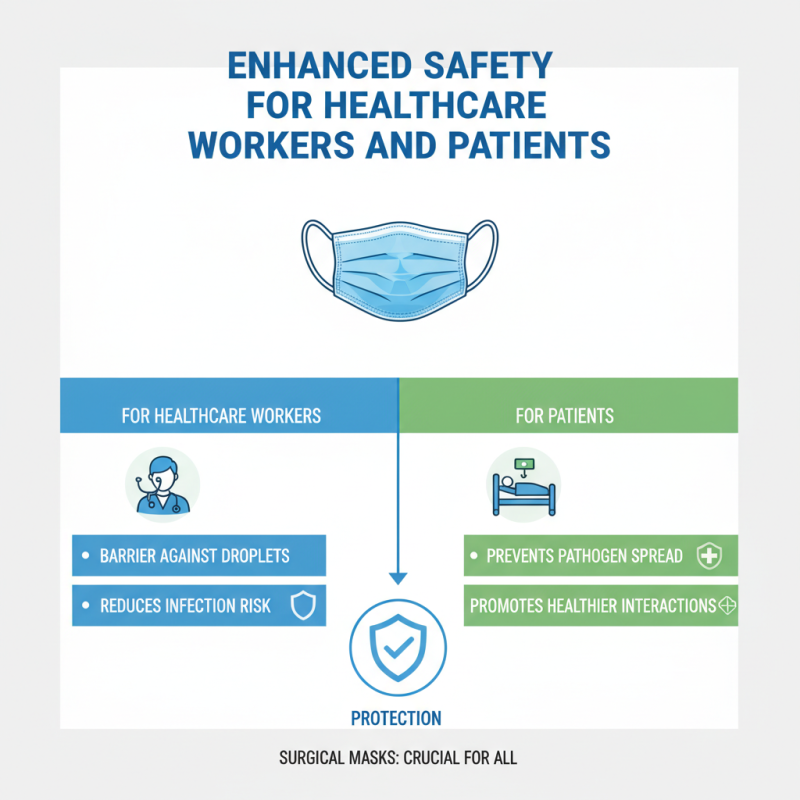
Surgical masks play a crucial role in enhancing safety for healthcare workers and patients. These masks provide a barrier against respiratory droplets, which are a primary mode of disease transmission. When healthcare personnel interact with patients, the risk of spreading infections can be high. Masks shield them from pathogens, reducing the chance of illness.
The effectiveness of surgical masks is evident in clinical environments. They limit the spread of bacteria and viruses, especially during procedures. However, not all masks provide equal protection. Poor-quality masks can compromise safety. It's essential for buyers to consider the specifications and certifications when sourcing masks.
Despite their benefits, some might underestimate their role in infection control. Surgical masks are not a standalone solution. Proper hand hygiene and environmental cleaning are also vital. A mask alone does not guarantee safety; it should be part of a comprehensive approach to health protection. Awareness and education about their correct use are necessary for maximum benefit.
Cost-Effectiveness and Accessibility for Global Markets
Surgical masks have gained importance in global markets due to their cost-effectiveness and accessibility. Many countries benefit from affordable production methods. This makes masks readily available during health crises. The price of these masks allows even low-income communities to invest in personal protection. As a result, many people can access essential health equipment without financial strain.
Accessibility also plays a critical role. Manufacturers have adapted to different markets' needs. This flexibility helps ensure a steady supply of masks in both urban and rural areas. However, there are challenges. Some regions still face logistical issues. Delivery can be slow and inconsistent. It raises concerns about mask availability when demand peaks.
The global demand for surgical masks fluctuates. Quality control remains a key concern. Ensuring that every mask meets health standards is not always guaranteed. Inaccessible healthcare systems can exacerbate these issues. Buyers must remain vigilant and informed. Each decision impacts public health, often beyond what we might initially understand.
Environmental Impact and Sustainability of Surgical Masks
Surgical masks have become essential in our lives, especially during health crises. However, their environmental impact is a growing concern. Many masks are made from plastics that take hundreds of years to decompose. This raises questions about their long-term sustainability.
Recycling options are limited for surgical masks. They often end up in landfills, contributing to plastic waste. Biodegradable alternatives are emerging, but they are not yet widely adopted. This creates a paradox; while masks are vital for protection, their excessive use leads to environmental harm.
Buyers need to consider the lifecycle of surgical masks. Educating oneself about sustainable choices is crucial. Small changes, like choosing recyclable or reusable options, can make a difference. Understanding the ecological footprint allows for better decisions. Balancing health safety with environmental responsibility is complex but necessary.
Top Benefits of Surgical Masks for Global Buyers? - Environmental Impact and Sustainability of Surgical Masks
| Benefit |
Description |
Environmental Impact |
Sustainability Rating |
| Infection Control |
Prevents the spread of infectious agents during procedures. |
Minimizes health hazards for both patients and healthcare workers. |
High |
| Pollution Reduction |
Helps in reducing exposure to airborne pollutants. |
Contributes to cleaner air quality in healthcare settings. |
Moderate |
| Comfort and Breathability |
Designed for prolonged use with comfort features. |
May use materials that are biodegradable or easily recyclable. |
High |
| Cost-Effectiveness |
Provides a low-cost solution for infection prevention. |
Less environmental strain due to reduced frequency of serious health issues. |
High |
| Versatility |
Suitable for various environments, including hospitals and public places. |
Promotes widespread health practices in diverse settings. |
Moderate |
Emerging Trends in Surgical Mask Technology and Design
The evolution of surgical mask technology is impressive. Designers are focusing on more than just filtration efficiency. They're also enhancing comfort and usability. Today’s masks are lighter and more breathable. Users appreciate this improvement, especially during long hours of wear.
More innovation is seen in materials. Some masks use advanced nanofibers for better filtration. Others incorporate moisture-wicking fabrics to manage sweat. These changes reflect a growing understanding of user needs. Yet, manufacturers must ensure that these developments do not compromise safety. That balance remains a challenge.
A trend toward customizable designs is emerging. Masks are now available in various colors and patterns. This personal touch can help increase compliance among users. However, it raises a question about the balance between fashion and function. Will aesthetics overshadow protective features? This is a vital point for continued discussion in the industry.