China Best Military Gas Mask Suppliers for Global Buyers
For global buyers, choosing a military gas mask supplier is not a price-only decision. The product must match its intended protective role, fit reliably, and arrive with clear testing and traceability records. Details matter: seal design, filter compatibility, storage conditions, shelf life, and replacement-part availability. A polished brochure is not proof.
Standards offer a firmer starting point. NIOSH’s CBRN respirator approval program sets defined performance and testing requirements for approved respirators; buyers should verify claims against current official records. The OPCW reported in 2023 that all declared chemical-weapons stockpiles had been destroyed. That milestone does not remove the need for emergency preparedness or dependable protective equipment. It does, however, remind buyers to distinguish documented capability from marketing language.
Fit is critical. Respiratory-protection researcher Dr. Lisa Brosseau’s work underscores that filtration alone cannot establish real-world protection; fit and correct use matter too. In paraphrase: a filter helps only when the respirator fits and is used as intended. This is a practical test for supplier claims. Request product-specific test evidence, material specifications, quality-control details, and after-sales support before comparing quotations. Ask how the supplier handles defects and replacement components. Some published specifications remain hard to compare, and that deserves scrutiny. This guide examines China-based suppliers through those verifiable factors, while recognizing that no supplier profile replaces independent testing or a qualified procurement review.
Military Gas Masks: Purpose, Components, and Operating Principles
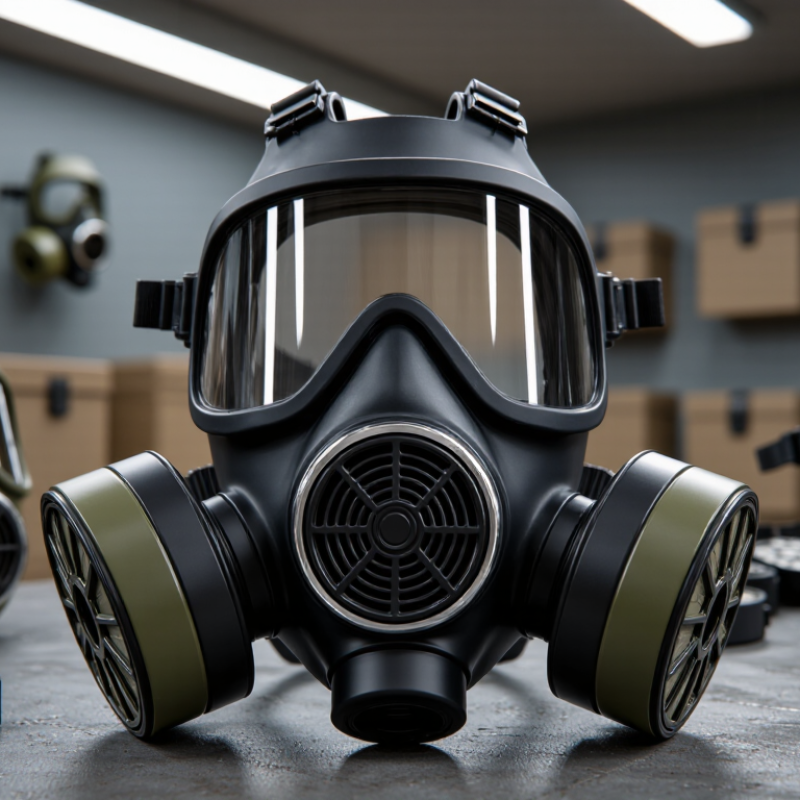
Military gas masks are designed to reduce exposure to certain airborne hazards when used with compatible filters and a secure face seal. They do not supply oxygen, and they cannot make every atmosphere safe. Fit matters. Facial hair, damaged seals, or poorly adjusted straps may allow contaminated air to enter. A mask should be selected for its stated purpose, not appearance alone.
A typical mask includes a facepiece, sealed visor, adjustable harness, inhalation and exhalation valves, and a filter connection. During breathing, outside air passes through the filter, which is designed to capture or treat specified contaminants. The exhalation valve directs used air outward. Clear vision and comfortable breathing are important, but neither proves that the seal is sound. Users need appropriate training and fit checks.
For global buyers, examine the stated protection scope, compatible filter types, storage life, maintenance guidance, and test documentation. Confirm that the product meets requirements in its intended market. Inspect seams, valve movement, visor clarity, and packaging condition on received samples. A checklist can miss real-world fit problems; that is an imperfect but useful reminder. Performance depends on correct selection, proper use, and regular inspection.
Types of Military Gas Masks and Their Typical Applications
Military gas masks serve different needs, from mobile field use to controlled support areas. A standard full-face air-purifying mask seals around the eyes and mouth, while a replaceable canister filters specified airborne hazards. It suits trained personnel who need mobility, but fit and canister selection matter. A poor seal can defeat good equipment.
Specialized multi-hazard canister masks are used when teams need broader protection against particles and certain chemical or biological hazards. Powered air-purifying variants can support longer tasks in fixed or decontamination areas, though batteries and bulk limit movement. Escape hoods are designed for short exits, not extended work. NIOSH’s 42 CFR Part 84 standard rates P100 filters at 99.97% efficiency in laboratory testing; that figure applies to particles, not every gas or vapor. Real-world protection depends on fit, maintenance, and hazard-specific selection.
Tips: Check the hazard assessment before choosing a mask or canister. Inspect the face seal, straps, valves, and expiry date. A checklist helps, but it cannot replace hands-on fit testing. Even experienced teams can miss small seal problems.
Quality Standards and Certifications for Global Buyers
For global buyers, a gas mask certificate is only the starting point. Check the exact model, facepiece size, filter type, and issuing laboratory. EN 136 covers full-face masks, while EN 14387 specifies gas and combination filters. Confirm that the certificates match the delivered product and the destination market’s requirements. Details matter.
Performance figures need context. OSHA’s Respiratory Protection standard, 29 CFR 1910.134, assigns an assigned protection factor of 50 to qualifying full-facepiece air-purifying respirators used within a compliant respiratory-protection program. That figure is not proof of chemical-agent protection. Buyers should request test reports for the specific mask-and-filter combination, including leakage, breathing resistance, and environmental conditioning results. Independent laboratory records are more useful than a broad product brochure.
Quality systems also deserve close review. ISO 9001 can support consistent manufacturing, but it does not certify a mask’s protective performance. Ask for lot traceability, production inspection records, filter expiry dates, and clear storage limits. A certificate can look tidy; a real shipment may still vary. Inspect several units from each lot, and record any seal damage or labeling mismatch before acceptance. It is an extra step, but skipping it can leave important gaps.
China Best Military Gas Mask Suppliers for Global Buyers — Quality Standards and Certifications
This timeline highlights selected respiratory-protection compliance milestones: the U.S. NIOSH respirator certification regulation (42 CFR Part 84), the EU PPE Regulation (EU) 2016/425, and China’s GB 2890-2022 standard for non-powered air-purifying gas masks. Dates indicate the year each regulation or standard was issued or adopted; they do not represent product performance or certification equivalence. Buyers should verify the current certificate and applicable standard for each specific mask and filter model.
How to Evaluate Chinese Military Gas Mask Suppliers
When evaluating Chinese military gas mask suppliers, ask for evidence tied to the exact model and production batch. A polished sample proves little. Request material specifications, inspection records, shelf-life data, and documented checks for face-seal leakage and valve performance. Confirm that test reports come from a competent laboratory and identify the tested configuration, not just a similar mask. NIOSH’s Certified Equipment List can verify whether a respirator is NIOSH-approved; that approval does not, by itself, establish military qualification or protection against every hazard. Paperwork matters.
Check fit and usability, too. OSHA’s respiratory protection standard, 29 CFR 1910.134, requires fit testing before use and at least annually for tight-fitting respirators. Its quantitative fit-test criteria include a fit factor of 500 for full-facepiece respirators and 100 for half-mask respirators. These are workplace benchmarks, not proof of military performance. Ask suppliers to explain how they validate compatibility with intended filters, spectacle inserts, and other equipment. Request batch traceability and review how defects trigger corrective action. A small weakness: supplier documents may look complete while leaving the test conditions unclear. Ask for raw results and independent verification, then compare them with the applicable product standards and procurement requirements.
Procurement, Customization, and Export Considerations
For global buyers, procurement should begin with the operating environment, not a catalogue. Specify expected wear time, climate, storage conditions, and compatibility with helmets or communications gear. Ask suppliers for test reports, component traceability, service-life guidance, and clear inspection criteria. Small details matter. A sample mask should be checked for seal, visibility, strap adjustment, and comfort during realistic movement. Custom sizing or materials can help, but every change needs documented validation. A rushed customization can weaken consistency between production batches.
Export planning deserves equal attention. The World Bank’s 2023 Logistics Performance Index assessed 139 economies, highlighting differences in customs, infrastructure, and shipment reliability. Buyers should confirm product classification, destination requirements, end-user documentation, and transit restrictions with qualified trade professionals before placing orders. Rules vary by destination. Build time for permits and independent quality checks into the schedule, rather than treating them as final paperwork. Ask for packaging details, humidity protection, and replacement-part availability, especially when equipment may sit in storage. I would not assume that a technically compliant product will arrive on time; procurement plans often underestimate customs delays. A written delivery schedule, inspection plan, and remedy for nonconforming goods can make supplier comparisons more reliable.