China Top 10 Red Light Therapy Spa Manufacturers
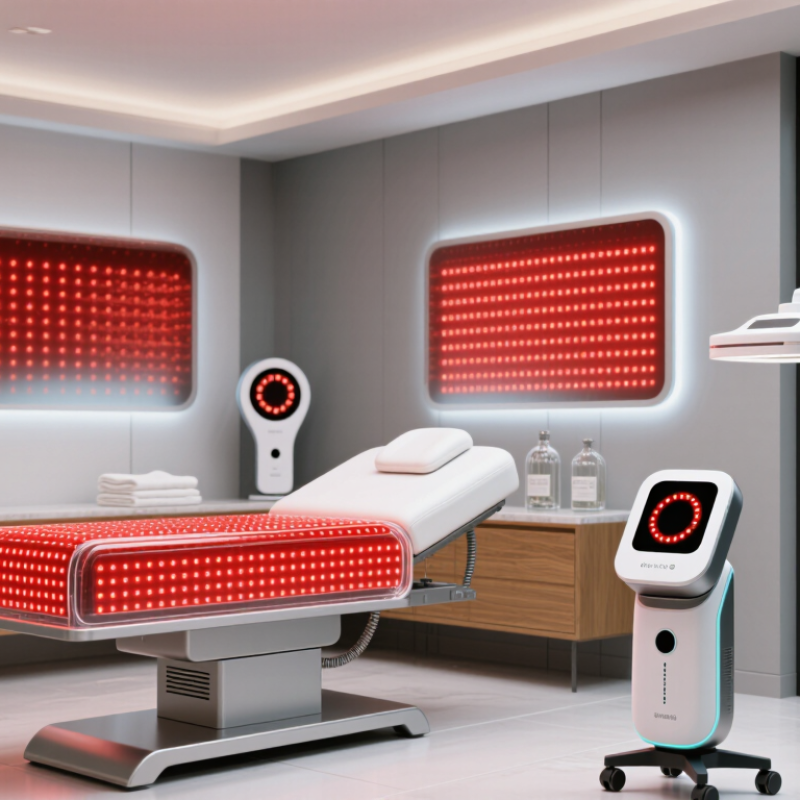
China’s red light therapy industry has become a notable source of professional wellness equipment. Among its expanding product categories, the Red Light Therapy Spa sector serves beauty centers, recovery studios, hotels, and wellness clinics. Manufacturers now offer wall panels, facial systems, full-body beds, and flexible commercial installations.
This guide introduces ten Chinese manufacturers associated with Red Light Therapy Spa equipment. It considers manufacturing experience, product design, wavelength consistency, irradiance testing, thermal control, and user safety features. It also reviews OEM support, documentation, warranty policies, and after-sales communication. These details matter when a spa invests in equipment used throughout the day.
Reliable suppliers should provide clear technical specifications, realistic treatment guidance, and traceable quality-control procedures. Independent testing, recognized management standards, and transparent factory information can strengthen buyer confidence. Yet paperwork alone is not enough. A polished brochure cannot replace stable output during repeated sessions.
Real-world evaluation remains important. Buyers should request product samples, inspect LED arrangement, and observe heat distribution after extended operation. Customer references may reveal practical issues that catalogs omit. Sometimes, the smallest details matter most.
No manufacturer is perfect. Product quality can vary between models, batches, and custom configurations. Some public information may also be incomplete or difficult to verify. Therefore, this overview should support careful comparison, not automatic purchasing decisions. It focuses on practical evidence and professional judgment, while recognizing that light-based wellness equipment should be used responsibly and according to applicable local requirements.
Red Light Therapy Market Scope: 630–660 nm and 810–850 nm Wavelengths
China’s top 10 red light therapy spa manufacturers are increasingly evaluated by wavelength precision, not appearance alone. The practical market scope centers on 630–660 nm and 810–850 nm systems. The first range is commonly selected for surface-level skin applications, while the second is used when deeper tissue exposure is intended. These are different tools.
Grand View Research estimated the global red light therapy market at about USD 1.1 billion in 2023, with continued growth through 2030. Its analysis also highlights rising demand for non-invasive wellness equipment and improved home-use technology. For Chinese spa equipment manufacturers, this creates pressure to document spectral output, irradiance, treatment distance, and thermal performance. A glowing panel proves little. Independent testing matters more.
Professional buyers should request spectrometer reports rather than rely on a product label. A 660 nm claim may hide broad spectral variation, while an 850 nm diode can produce uneven coverage across a treatment bed. The World Association for Laser Therapy emphasizes dose, power density, and treatment timing in photobiomodulation practice. Yet real-world spa protocols remain inconsistent, and that deserves honesty. More light is not automatically better. A strong manufacturer should provide calibration records, electrical safety documentation, cooling details, and clear operating limits. Some suppliers still describe “deep penetration” without showing measurable data. That is a weakness, not expertise.
China Top 10 Red Light Therapy Spa Manufacturers
This chart presents the red and near-infrared wavelength bands included in the market scope: 630–660 nm and 810–850 nm. The visualization focuses on technology coverage rather than company-level or brand-level data.
Red light wavelengths are commonly associated with visible red-light applications, while near-infrared wavelengths represent a longer, invisible portion of the optical spectrum.
How China’s Top 10 Spa Manufacturers Compare by 10–100 mW/cm² Irradiance
China’s top 10 red light therapy spa manufacturers should be compared by measured irradiance, not LED count or housing design. The practical range is 10–100 mW/cm² at the treatment surface. At 10 mW/cm², a 10-minute session delivers about 6 J/cm². At 100 mW/cm², the same session delivers 60 J/cm². That is a tenfold difference.
Professional photobiomodulation reviews commonly examine fluences near 1–10 J/cm², although protocols vary by wavelength, tissue depth, and treatment goal. The World Association for Photobiomodulation Therapy provides dosage guidance for selected clinical applications, while IEC 62471 supports photobiological safety assessment. ICNIRP exposure guidance also reminds buyers to verify optical safety, especially with close-contact devices. These references do not prove that higher irradiance produces better spa results. More power may simply increase heat, discomfort, or dosing errors.
Tips: Ask each manufacturer for independent irradiance testing at the actual skin distance. Check wavelength tolerance, beam uniformity, timer accuracy, and thermal control. Request a spectrometer report, not only a marketing sheet. Measure several points across the panel. A claimed 100 mW/cm² may represent one bright center spot. That matters. In my experience, documentation is often weaker than the hardware. Some specifications also confuse optical output with electrical input, which deserves careful review before ranking suppliers. A lower, stable output can be more useful than an impressive peak value.
Manufacturer Technologies: LED Panels, Beds, Masks, and Full-Body Systems
China Top 10 Red Light Therapy Spa Manufacturers
China’s leading spa manufacturers now develop more than simple red-light panels. A 2024 Grand View Research report valued the global LED light therapy market at over USD 1 billion and projected strong annual growth through 2030. This expansion is pushing factories toward measurable output, modular designs, and easier operator training.
Panels remain the practical entry point. They can target the face, shoulders, or a treatment chair, while adjustable stands improve positioning.
Beds use multiple LED rows for broader coverage, but ventilation and uniform irradiance require careful engineering.
Masks offer portability and close facial contact. Their fit, weight, eye protection, and session controls matter more than a glossy shell.
Full-body systems create a stronger visual experience, yet they need stable temperature control and clear exposure guidance.
Wavelengths need evidence.
Many systems use red light near 630–660 nanometres and near-infrared light near 810–850 nanometres. A 2023 review in Photobiomodulation, Photomedicine, and Laser Surgery noted that outcomes depend on wavelength, irradiance, dose, and treatment timing.
More power is not automatically better. That point is often missed.
Professional buyers should request independent irradiance testing, electrical safety documentation, timer accuracy, and maintenance records. Manufacturers should also disclose measurement distance and sensor type. Otherwise, advertised numbers can mislead. Some product claims still run ahead of clinical evidence, so responsible suppliers use cautious language and track customer feedback rather than promising dramatic results.
Safety and Quality Benchmarks: IEC 62471, CE, RoHS, and ISO 13485
China Top 10 Red Light Therapy Spa Manufacturers
For a China-focused top-ten shortlist, safety evidence should outrank brightness claims. IEC 62471 evaluates photobiological risks, including retinal and skin exposure from optical radiation. Ask for a laboratory report identifying wavelength, irradiance, distance, exposure time, and risk group. A glowing panel proves little. The standard does not prove clinical effectiveness.
The Global Wellness Institute’s 2024 Global Wellness Economy Monitor valued wellness spending at 6.3 trillion dollars in 2023. That scale raises expectations for traceable equipment, not merely attractive spa cabins. Grand View Research’s 2024 market analysis projected continued red-light therapy growth, but estimates vary with device definitions. That uncertainty deserves disclosure.
CE is a conformity marking, not a universal quality certificate. Manufacturers should show applicable technical files, risk assessments, and declarations of conformity. RoHS compliance requires controlled hazardous substances, supported by supplier declarations and material testing. ISO 13485 demonstrates a medical-device quality management system; it does not automatically prove spa performance. During factory audits, inspect serial-number logs, calibration records, cooling vents, and timer failure tests. One uncomfortable question remains: does the delivered dose match the tested dose? Often, documentation is thinner than marketing.
Selection Criteria: Treatment Area, 5–20 Minute Sessions, Warranty, and OEM Support
China Top 10 Red Light Therapy Spa Manufacturers
When comparing Chinese red light therapy spa manufacturers, start with the treatment area. A compact facial panel suits targeted sessions, while a full-body bed supports larger wellness rooms. Ask for measured coverage, wavelength ranges, irradiance data, and heat control. Marketing images can look impressive. Technical reports matter more.
Session design is another practical test. Equipment should support adjustable programs between 5 and 20 minutes, with clear controls for staff and clients. A reliable manufacturer explains recommended distances and operating limits. Review the warranty carefully. Confirm its duration, covered parts, repair procedures, and response times. A longer warranty is useful, but only when service remains available after installation.
Tips: Request a sample operating guide, test the control panel, and ask for references from similar spas. For OEM projects, confirm logo placement, software language, packaging, manuals, and replacement-part access. Good suppliers provide consistent documentation and accept reasonable design changes. However, customization can increase lead times and complicate maintenance. A low quotation may hide weaker LEDs or limited support. No checklist is perfect. Allow time for independent inspection before placing a large order.