How to Choose the Right Air Filter Mask for Your Needs?
Choosing the right air filter mask can be challenging. With various options available, how do you decide? According to Dr. Emily Tran, a leading expert in respiratory health, “The effectiveness of an air filter mask lies in its fit and filtration capabilities.” This statement highlights the importance of understanding both comfort and performance when selecting a mask.
Different environments require different features. For instance, in polluted urban areas, a mask with high filtration efficiency is essential. Many users overlook the necessity of checking material composition. The wrong material can lead to discomfort and ineffective filtration.
Some masks are designed with adjustability. A good fit is crucial to prevent air leaks. However, many people find it difficult to achieve a perfect seal. Consider the nuances of your breathing patterns. Each individual will have unique needs. Reflecting on these factors can help you make an informed choice.
Understanding Different Types of Air Filter Masks Available Today
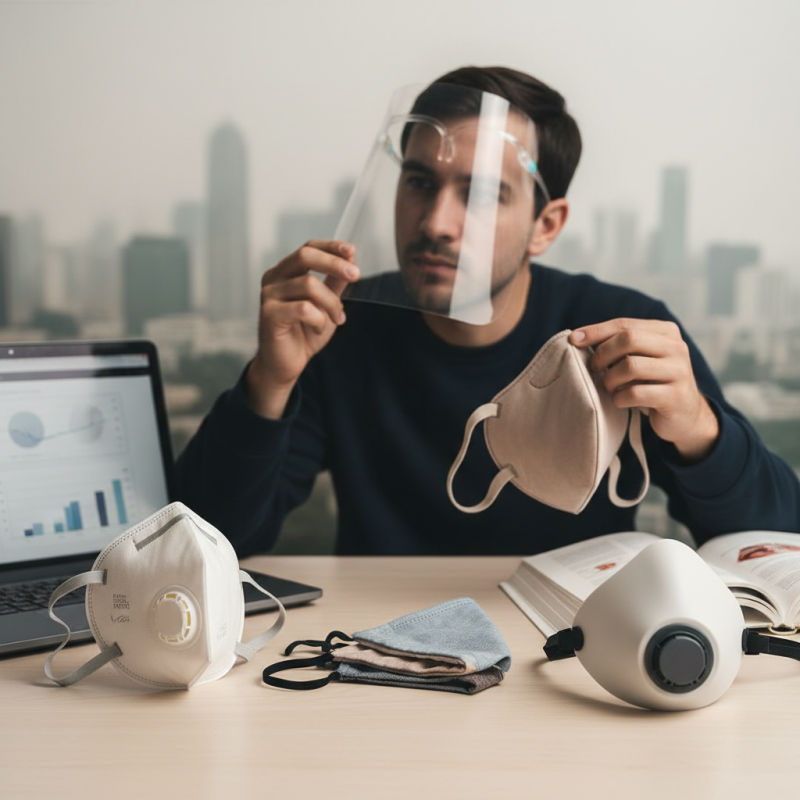
Air filter masks come in various types, each designed for different purposes. The most common types include N95 respirators, surgical masks, and cloth masks.
N95 masks offer high filtration efficiency, capturing 95% of airborne particles. They are commonly used in healthcare settings.
Surgical masks primarily protect others from the wearer’s respiratory droplets but provide less filtration for the wearer.
Cloth masks, on the other hand, are more versatile but generally less effective.
When choosing an air filter mask, consider your environment. If you live in an area with high pollution, an N95 might be essential.
However, for daily errands, a cloth mask could suffice. Remember that comfort matters, too. A mask that fits well will encourage consistent use.
Be mindful of the materials used, as some fabrics may irritate your skin.
It’s also crucial to reflect on your needs. Are you seeking protection or just a social responsibility? Knowing your purpose can guide your choice.
Not every mask is one-size-fits-all. What works for one person may not work for another.
Think about your activities and the level of exposure you may face.
Identifying Your Specific Needs and Use Cases for Air Filter Masks
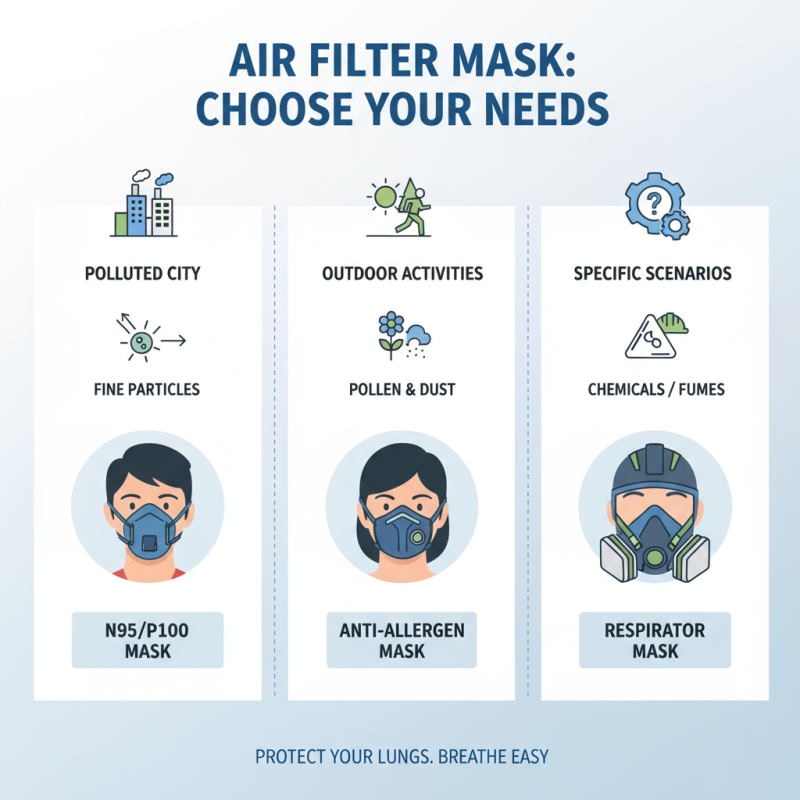
Choosing the right air filter mask starts with understanding your needs. Different environments require different filters. If you live in a polluted city, select a mask that can filter out fine particles. For outdoor activities, consider masks that protect against pollen and dust. Each scenario demands specific features.
Consider your daily activities. Do you exercise outdoors or engage in construction work? You’ll need a mask that fits tightly and offers good breathability. It’s important to check the filter ratings. Inadequate filters may not offer the protection you seek. Look for details on filtration efficiency, which can vary widely.
Don't overlook comfort. An uncomfortable mask may deter you from using it consistently. Try different styles, as fit can significantly influence effectiveness. Reflect on your unique circumstances, and remember, the perfect mask doesn't exist for everyone. Think about your situation and test different options to find what works best.
Evaluating Mask Filter Ratings and Performance Standards
When selecting an air filter mask, understanding filter ratings is crucial. Masks are usually classified by their filtration efficiency. Look for ratings like N95 or FFP2, as these indicate the mask's ability to block particles. However, ratings can sometimes be confusing. Just because a mask is rated high doesn't mean it’s the best choice for every situation.
Performance standards also vary. Testing methods may differ depending on the manufacturer. For instance, some masks perform well under controlled conditions but fail in real-world scenarios. Thus, it’s important to consider factors like the mask’s fit and comfort. An ill-fitting mask, regardless of rating, can compromise its effectiveness.
Reflect on your actual needs. Consider your environment and the type of exposure you’ll face. For daily commuting, a high-rated mask may be sufficient, while those in polluted areas need better protection. This thoughtfulness can lead to smarter choices. Finding the right balance between comfort and filtration efficiency might be challenging. It requires careful research and, sometimes, a trial-and-error approach.
How to Choose the Right Air Filter Mask for Your Needs?
| Mask Type |
Filter Rating |
Particle Size Reduction |
Applications |
Comfort Level |
| N95 Respirator |
N95 |
95% of 0.3 micron particles |
Construction, healthcare |
Good |
| P100 Respirator |
P100 |
99.97% of 0.3 micron particles |
Hazardous materials |
Moderate |
| Surgical Mask |
ASTM Level 1-3 |
Fluid-resistant (up to certain levels) |
Medical, dental |
High |
| Half-Face Mask |
Various (P95, P100) |
Variable depending on filters |
Industrial, chemical |
Variable |
| Full-Face Mask |
Various (P100) |
Variable depending on filters |
Highly hazardous environments |
High |
Assessing Comfort, Fit, and Wearability Factors in Masks
When selecting an air filter mask, comfort, fit, and wearability are critical factors. Reports indicate that a mask's effectiveness largely depends on a tight seal around the face. Poor fitting masks can reduce filtration efficiency by up to 80%. This highlights the need for masks that contour well to different facial structures. Adjustable ear loops or ties can provide a better fit for various users.
Comfort matters, especially during prolonged use. A survey found that 70% of users reported discomfort when wearing a mask for over an hour. Soft materials and breathable fabric are essential in making masks more user-friendly. If a mask feels too tight or irritating, people are likely to lower it or remove it entirely. Adjustable nose wires can also enhance comfort, reducing fogging for glasses wearers.
Wearability should include considerations for activities. Some masks perform poorly during exercise or in humid conditions. Researchers found that wearing certain masks during physical activity could raise breathing resistance significantly. It’s crucial to test a mask in your typical environment. This reflects a need for personalized evaluation rather than reliance on one-size-fits-all solutions.
Comfort and Fit Assessment for Air Filter Masks
Comparing Price Points and Quality Across Various Brands
When selecting an air filter mask, it’s vital to weigh price and quality. A low-cost mask may save you money but might not offer the protection you need. On the other hand, a premium mask could come with advanced features, but does it fit your specific environment? Finding the balance is key.
Tips: Check the mask's filtration efficiency. A mask with a higher rating generally offers better protection. Consider the materials used; some masks might feel uncomfortable or might not fit well, leading to gaps. It's crucial for the mask to seal properly, no matter the cost.
In addition to price, brand reputation is important, yet not everything. A lesser-known brand may surprise you with quality. Look for user reviews to understand what regular users think. Be aware that packaging might look appealing, but effectiveness is a more critical aspect. Sometimes, the best option is hidden among the less expensive choices.