How to Choose the Right N95 Mask for Global Procurement?
Choosing the right N95 mask for global procurement is crucial for ensuring safety and health. Dr. Mark H. S. Smith, an expert in respiratory protection, once said, “Selecting the appropriate N95 mask can significantly impact health outcomes.” His insights remind us that not all N95 masks are created equal.
The market is flooded with various options, making the selection process challenging. Factors such as fit, filtration efficiency, and comfort play essential roles. A poorly fitting N95 mask can compromise its effectiveness. Furthermore, understanding the certification standards for N95 masks is vital in procurement. This ensures that the masks meet safety regulations.
As we navigate through choices, it is essential to acknowledge the complexities involved. Not every supplier offers reliable products. Some may not provide accurate information regarding their masks. Discerning the right options requires careful consideration and research. Quality assurance should be a priority. It is important to reflect on these nuances when making procurement decisions in a world that demands the highest standards of safety.

Understanding N95 Masks: Types and Standards for Global Procurement
Understanding N95 masks is essential for global procurement. These masks are crucial in protecting against airborne particles and infectious agents. There are different types of N95 masks, and selecting the right one is critical in various scenarios.
The N95 standard requires at least 95% filtration efficiency against non-oily particles. According to the CDC, a properly fitted N95 can significantly reduce exposure to harmful airborne substances. Some masks are designed with exhalation valves. However, these may not sufficiently protect others from respiratory droplets.
Different countries have unique regulations for masks. For instance, in Europe, FFP2 and FFP3 masks provide similar protection levels. A report from the World Health Organization stresses the need for procurement teams to understand these distinctions. This knowledge aids in making informed choices. Additionally, factors like comfort and breathability can impact usage, especially in prolonged situations. Balancing protection and comfort is challenging. Evaluating real-world conditions in which these masks will be used is essential for effective procurement strategies.
How to Choose the Right N95 Mask for Global Procurement?
| Mask Type |
Filtration Efficiency |
Fit Test Requirement |
Usage Duration |
Certification Standard |
| N95 Respirator |
95% of particles ≥ 0.3 microns |
Yes |
Single use recommended |
NIOSH-approved |
| N99 Respirator |
99% of particles ≥ 0.3 microns |
Yes |
Single use recommended |
NIOSH-approved |
| FFP2 Mask |
94% of particles ≥ 0.3 microns |
Recommended |
Variable based on use |
EN 149:2001 |
| FFP3 Mask |
99% of particles ≥ 0.3 microns |
Recommended |
Variable based on use |
EN 149:2001 |
Key Factors to Consider When Sourcing N95 Masks Internationally
When sourcing N95 masks internationally, several key factors demand careful consideration. Assessing the certification and compliance of the masks is critical. Masks must meet stringent filtering efficiency standards. This ensures they provide adequate protection against airborne particles. Verify certifications through recognized health organizations, which enhances credibility.
Quality control is another essential aspect. Manufacturers should have robust quality assurance processes. Look for supplier reports and testing data to gauge reliability. It's important to manage expectations; not all masks labeled as N95 will meet the required standards consistently. Additionally, consider the supply chain's stability. Disruptions can delay delivery, impacting procurement timelines. Understand the logistics involved in shipping.
Be mindful of price variations. While cost is a factor, an unusually low price may indicate compromised quality. Engage with suppliers who can provide transparent pricing models. Building relationships with trusted manufacturers can yield better insights and potentially more reliable products. Reflect on the balance between budget constraints and the necessity for safe, effective respiratory protection.
Global N95 Mask Procurement: Key Factors Considered
This chart illustrates the key factors considered when sourcing N95 masks internationally. The data highlights various criteria deemed important by procurement professionals, including Cost, Quality, Certification, Supplier Reliability, and Lead Time.
Evaluating Manufacturer Credentials and Certifications for N95 Masks
When selecting N95 masks for global procurement, examining manufacturer credentials is critical. The National Institute for Occupational Safety and Health (NIOSH) sets specific standards that these masks must meet. A study from the American Industrial Hygiene Association emphasizes that certified masks reduce inhalation exposure to airborne pathogens by up to 95%. This reliability is crucial for healthcare settings worldwide.
Moreover, manufacturers should provide clear evidence of their certifications. Look for NIOSH-approved labels and test reports. A report from the Centers for Disease Control and Prevention highlights that 75% of counterfeit N95 masks do not meet quality standards. Therefore, knowing how to verify these documents is vital. Engage with regulatory bodies and industry experts to assess manufacturer legitimacy.
However, the landscape is complex. Some manufacturers might present fraudulent certifications. Scrutinizing supply chains becomes essential to ensure quality. Also, recent trends show a growing number of invalidated certifications. It's a reminder that due diligence is always necessary. Investing time in rigorous evaluation can prevent costly mistakes and safeguard health standards.
Assessing Supply Chain Reliability and Delivery Times for N95 Masks
When assessing the supply chain reliability for N95 masks, it's vital to consider various factors. Firstly, check the manufacturer's production capacity and track record. Have they consistently met demand during crises? This can reveal their reliability. Additionally, understanding the logistics involved is essential. What are their shipping methods? Are there potential delays at customs?
Tips: Always establish communication with suppliers. Regular updates can help you navigate any unforeseen issues in delivery timelines. Trustworthy suppliers should be open about their challenges.
Another key aspect is the location of the suppliers. Are they based in regions prone to disruptions? Natural disasters or political instability can impact their ability to deliver. Observe regional trends and past events to gauge risk.
Tips: Diversifying suppliers can mitigate risks. If one fails, you won’t be left stranded. Evaluate multiple options carefully for the best responses when disruptions occur. Always have a backup plan.
Lastly, monitor market trends for N95 mask production. Prices fluctuate due to demand and supply. Awareness of these changes can help in anticipating delivery times. Be proactive; staying informed will empower better decision-making.
Cost Analysis: Budgeting for International N95 Mask Procurement
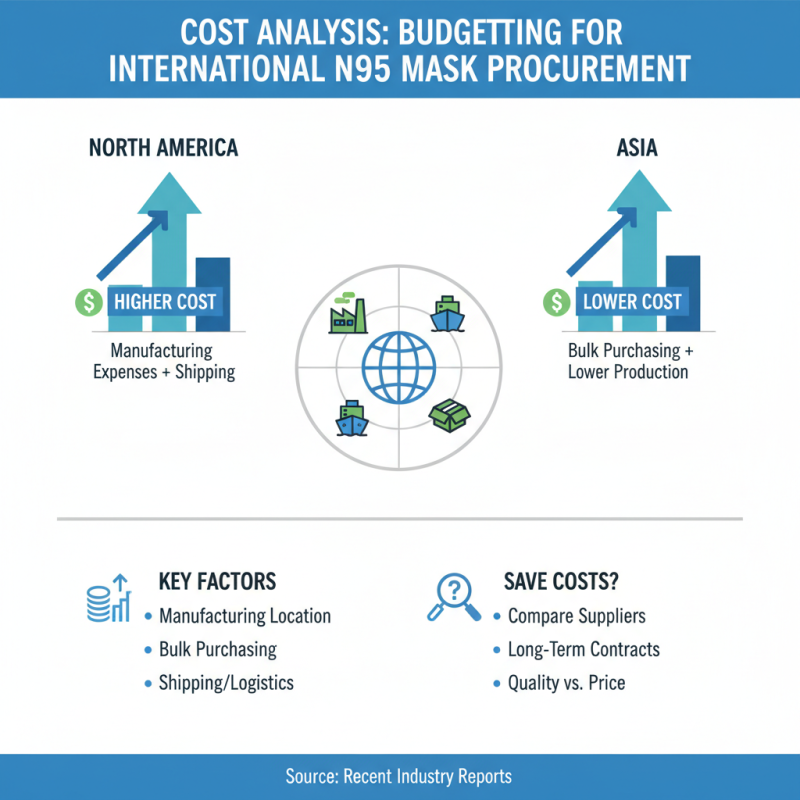
When budgeting for international N95 mask procurement, understanding costs is essential. Recent reports indicate that N95 mask prices vary significantly based on factors like manufacturing location and bulk purchasing. For example, masks produced in North America generally cost more than those sourced from Asia due to production expenses and shipping.
Analyzing the total cost of acquisition is vital. A study from the Global Procurement Agency noted that hidden costs, such as customs duties and transportation fees, can inflate the budget by up to 30%. International procurement often involves long lead times, which may affect pricing stability. Companies must account for these variables while planning their budgets.
Furthermore, quality assurance plays a significant role in cost. Lower-priced masks may compromise on filtration efficiency. Reports from health organizations emphasize that subpar masks can fail to meet the necessary filtration standards. This can lead to increased health risks, creating additional costs related to healthcare and liability. Decisions in this area require careful consideration of both immediate costs and long-term value.