
[wpml_language_selector_widget]
Choosing the best line filters from China requires more than comparing prices on a supplier platform. It demands careful engineering, practical testing, and disciplined supplier evaluation. A filter that looks excellent on paper may perform poorly after installation. Its insertion loss can change with frequency, load current, impedance, and cable layout.
Henry W. Ott, a respected EMC engineering authority, said, “The best way to solve an EMC problem is to prevent it from occurring in the first place.” This principle applies directly to line filters. Buyers should review circuit diagrams, operating voltage, current ratings, leakage current, temperature limits, and required EMC performance before requesting quotations. A reliable manufacturer should provide traceable datasheets, test methods, material details, and production records. Factory audits can also reveal practical weaknesses, such as inconsistent soldering, poor shielding, or weak quality control.
Small details matter.
A sample filter may work on a bench, yet fail inside a metal cabinet with long grounding paths. Testing under real operating conditions is therefore essential. Ask suppliers for samples, inspection reports, and evidence of stable batch production. Independent laboratory verification may be worthwhile for critical equipment. Still, no checklist is perfect. I have seen buyers focus heavily on unit cost and overlook installation losses, replacement availability, or unclear specifications. That mistake can become expensive later. This guide explains how to compare Chinese line filters with greater confidence, while recognizing that the cheapest option is rarely the safest engineering choice.
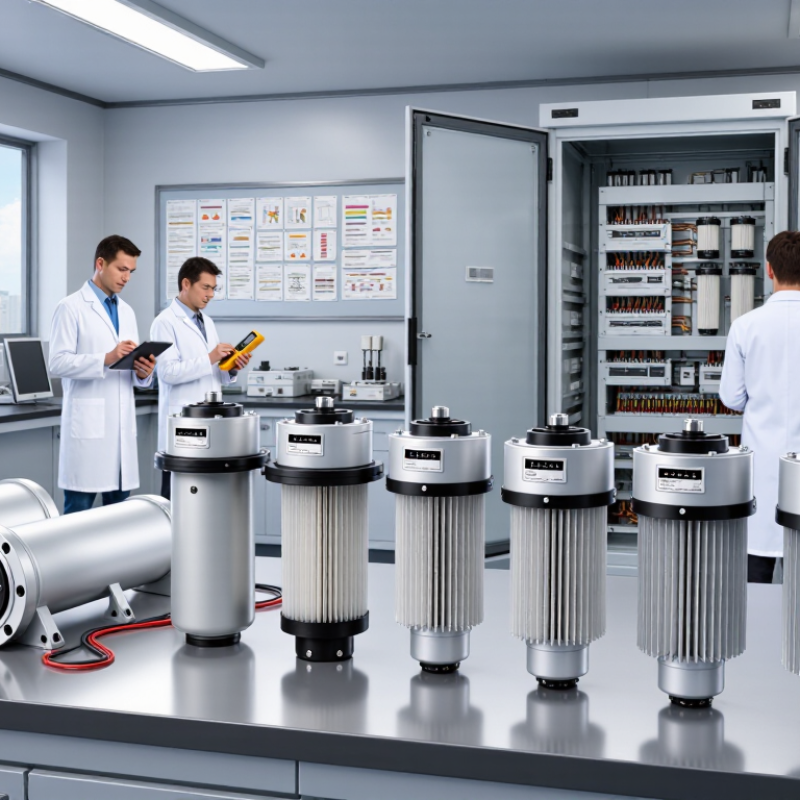
Line filters are electrical components that reduce unwanted noise on power or signal lines. They are usually installed near a device’s input or output connection. Inside, capacitors and inductors weaken high-frequency interference. Noise matters. Without proper filtering, motors, converters, and digital circuits may disturb nearby equipment or suffer unstable performance.
China is a practical sourcing location because its manufacturing network covers magnetic cores, capacitors, stamped housings, and custom assemblies. Many suppliers can support prototypes, small production runs, and larger orders. However, low pricing alone proves very little. Ask for insertion-loss curves, rated voltage, current capacity, temperature limits, and verified safety documentation. Samples expose weaknesses. Check terminal quality, sealing, solder joints, and filter performance under realistic loads.
A reliable supplier should explain its test equipment and production controls clearly. Request batch records, material traceability, and inspection reports before placing a large order. Factory video calls or independent audits can reveal process details that product photos hide. Communication may still become difficult across languages and time zones. I would also compare packaging, replacement support, and delivery consistency, not only the unit price. One early mistake is choosing a filter by appearance. A compact metal case may look professional but perform poorly at the frequencies your equipment generates. Share the working voltage, current, cable layout, environment, and target frequency range before requesting quotations.
| Selection Dimension | Recommended Filter Type | Typical Technical Data | Why It Matters | China Sourcing Verification |
|---|---|---|---|---|
| Power System | Single-phase filter | Commonly used on 110–120 V or 220–240 V AC equipment; current ratings often range from 1 A to 30 A for equipment-level applications. | Voltage and current compatibility are essential for safe operation and prevention of overheating. | Request the rated voltage, rated current, operating frequency, wiring diagram, and dielectric-strength test data. |
| Higher-Power Equipment | Three-phase filter | Designed for three-phase AC systems, commonly including 380–415 V industrial networks; available ratings depend on the load and installation method. | Three-phase filtering can reduce conducted interference from motors, drives, industrial power supplies, and automation equipment. | Confirm phase configuration, neutral requirements, terminal arrangement, short-circuit rating, and enclosure or mounting method. |
| Noise Direction | Common-mode filter | Suppresses noise appearing in the same direction on multiple conductors, often using a common-mode choke and capacitors. | Useful for reducing interference coupled between power conductors and ground or between equipment and the mains network. | Ask for insertion-loss curves measured with defined source and load impedances rather than relying on a single attenuation value. |
| Differential Noise | Differential-mode filter | Uses series inductance and line-to-line capacitance to reduce noise voltage between conductors. | Helps address switching noise generated by converters, chargers, inverters, and other power-electronic circuits. | Verify capacitor safety classification, capacitance tolerance, leakage current, and performance at the intended current. |
| EMI Performance | CISPR-oriented design | Performance is normally evaluated across a frequency range such as 150 kHz–30 MHz for conducted emissions, depending on the applicable product standard. | Filtering must target the actual interference frequency; a high current rating alone does not guarantee effective attenuation. | Request a complete insertion-loss graph, test setup, test frequency range, and measurement conditions. |
| Safety Capacitors | X and Y capacitor network | X capacitors are connected across line conductors; Y capacitors are connected from line conductors to protective earth or accessible conductive parts. | Correct safety capacitor classification reduces the risk associated with capacitor failure and leakage current. | Check recognized safety markings, capacitance values, flame-retardant materials, and certificates matching the exact model. |
| Leakage Current | Low-leakage filter | Uses reduced line-to-ground capacitance or a specialized circuit to limit protective-earth leakage current. | Important for medical, laboratory, portable, and residual-current-protected equipment. | Specify the maximum leakage-current limit at the rated voltage and frequency; require production test records. |
| Surge Environment | Filter with surge protection | May combine EMI filtering with a metal-oxide varistor or other surge-protection component; surge rating must be stated separately. | Provides additional protection against transient overvoltage but does not replace a complete site-level surge-protection system. | Verify maximum continuous operating voltage, surge-current rating, energy rating, clamping behavior, and thermal protection. |
| Operating Temperature | Industrial-temperature design | Common product ranges include approximately −25 °C to +85 °C, but the actual range varies by construction and components. | Temperature affects capacitor life, magnetic-core performance, resistance, and allowable current. | Confirm derating curves, thermal-rise data, storage temperature, humidity limits, and altitude restrictions. |
| Installation Method | Chassis, DIN-rail, or PCB mount | Chassis filters suit equipment panels; DIN-rail models suit control cabinets; PCB filters suit compact electronic assemblies. | Mechanical compatibility affects installation time, grounding quality, vibration resistance, and cabinet layout. | Request dimensional drawings, mounting-hole tolerances, terminal torque values, wire ranges, and grounding requirements. |
| Housing and Environment | Shielded or enclosed construction | Metal housings can support electromagnetic shielding when properly bonded to the equipment chassis; ingress protection depends on the complete assembly. | A filter cannot perform reliably if cable routing, enclosure bonding, or grounding creates a bypass path. | Review housing material, surface treatment, grounding continuity, corrosion resistance, and any stated IP rating. |
| Compliance Documentation | Application-specific compliance | Relevant requirements may include IEC 60939 for passive filter units, IEC 60335, IEC 61010, IEC 62368-1, or other product-specific standards. | The correct standard depends on the final equipment and intended market, not only on the filter itself. | Match certificates, test reports, declarations, and component approvals to the exact model, revision, and rated values. |
| Quality Consistency | Controlled production lot | Important controls include incoming-component inspection, winding checks, capacitance checks, hipot testing, insulation resistance, and final visual inspection. | Stable electrical performance requires consistent magnetic components, capacitors, terminals, insulation, and assembly processes. | Request a quality-control plan, sample inspection report, traceability method, change-notification procedure, and lot-level test records. |
| Commercial Evaluation | Total-cost comparison | Compare unit price together with tooling, minimum order quantity, testing, packaging, freight, import duties, replacement cost, and warranty handling. | The lowest quotation may become more expensive if attenuation, reliability, lead time, or documentation is inadequate. | Obtain a written quotation with Incoterms, lead time, payment terms, sample policy, warranty period, and approved specifications. |
| Supplier Selection | Verified manufacturing source | Evaluate engineering capability, test equipment, production capacity, export experience, response time, and ability to support customization. | China offers broad manufacturing capacity and competitive supply options, but supplier quality can vary significantly. | Use samples, third-party factory audits, reference inspections, pre-shipment testing, and a signed technical specification before mass production. |