[wpml_language_selector_widget]

How to Choose the Right Dust Mask for Your Needs?

Choosing the right dust mask can feel overwhelming. With so many options, it’s hard to know what you really need. A dust mask protects you from harmful particles in the air. However, not all masks are created equal. Some are designed for construction work, while others suit everyday use.

Think about your specific situation. Will you be exposed to fine dust or chemical particles? The right mask can make a significant difference in your health. Consider comfort too; a mask that fits poorly will likely be ignored. You might find yourself adjusting it constantly, which defeats its purpose.

Reflect on past experiences. Maybe a mask irritated your skin, or it didn’t filter well. Learning from these moments will help you make better choices. Investing time in selecting the right dust mask is crucial for your safety and comfort. Don’t rush this decision; it’s essential to find a mask that truly meets your needs.
How to Choose the Right Dust Mask for Your Needs?

Understanding the Different Types of Dust Masks Available on the Market

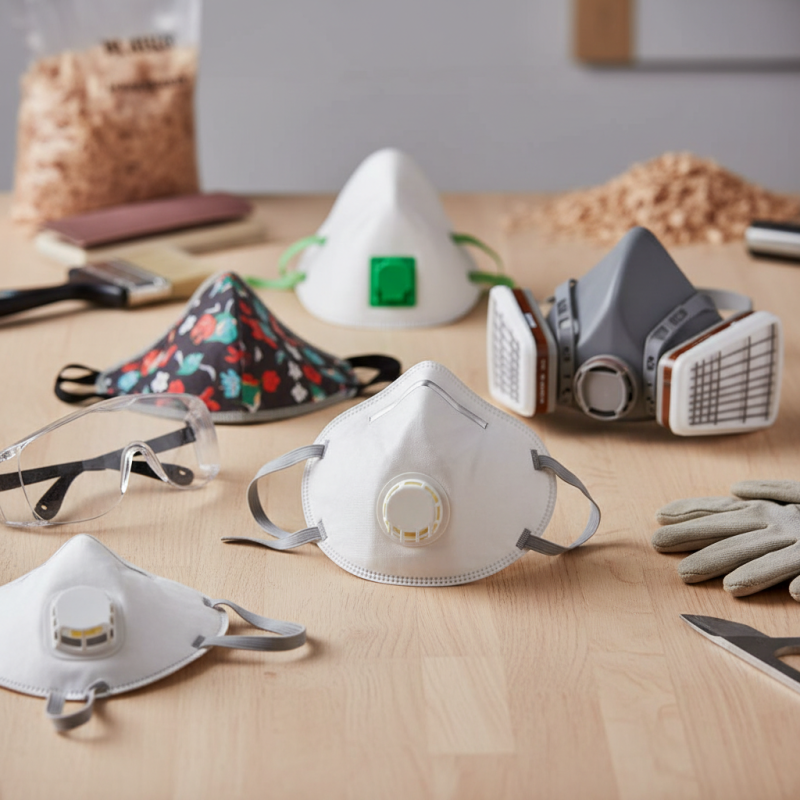
When choosing a dust mask, understanding the types available is crucial. Dust masks are designed to protect respiratory health. There are various models, each with specific uses. N95 respirators filter out at least 95% of airborne particles. They are common in construction and healthcare. On the other hand, simple cloth masks provide minimal protection against dust but are more comfortable. They are often used in non-hazardous environments.

According to a report from the National Institute for Occupational Safety and Health, over 4 million workers were exposed to respiratory hazards. This highlights the need for proper protective gear. A good dust mask can significantly reduce exposure. Many people underestimate the importance of a proper fit. A mask that does not seal well allows dust in, rendering it ineffective.

Tips: Always check the mask's rating. Look for certificates or compliance with safety standards. Test the fit by inhaling and checking for leaks. Regularly replace your mask. Over time, they can wear out and lose effectiveness. Not all masks are suitable for every situation. Assess your work environment before making a choice.


Key Features to Look for in a Dust Mask: Protection Levels and Fit

When selecting a dust mask, it's vital to focus on protection levels and fit. The mask should provide adequate filtration to block harmful particles. According to a study by the National Institute for Occupational Safety and Health (NIOSH), masks with a higher filtration efficiency can significantly reduce inhalation of fine dust particles. Look for masks rated N95 or higher for effective protection against particulates.

Fit is just as crucial as filtration. A poorly fitted mask will allow unfiltered air to enter, compromising safety. The CDC recommends that masks should form a tight seal around the face. This can be challenging, especially for users with facial hair or unique face shapes. The right size and adjustment features are essential for maximum effectiveness. Reports indicate that up to 30% of masks fail to provide adequate protection due to improper fit.

Some users might underestimate the importance of comfort. Masks that are too dense or heavy can lead to fatigue. Breathing comfortably is key, especially during long use. A balance between safety and comfort must be struck. Non-compliance often stems from discomfort, leading to insufficient protection. It's important to evaluate both fit and comfort to ensure consistent use, especially in situations with prolonged exposure to dust.

How to Choose the Right Dust Mask for Your Needs? - Key Features to Look for in a Dust Mask: Protection Levels and Fit

Feature Description Protection Level Fit Type
N95 Respirator Filters at least 95% of airborne particles 95% filtration efficiency Cup shape for secure fit
P100 Respirator Filters 99.97% of airborne particles 99.97% filtration efficiency Full face coverage for complete seal
Dust Mask Basic protection against non-toxic dust Minimal filtration (not rated) Loose fit for easy breathing
Surgical Mask Protects against large droplets, splashes, and sprays Not rated for particulate filtration Loose fit, usually ear-loop
Reusable Cloth Mask Can be washed and reused, comfortable Variable protection based on material Adjustable straps for better fit

Evaluating NIOSH Ratings: How to Interpret Respirator Classifications

How to Choose the Right Dust Mask for Your Needs?

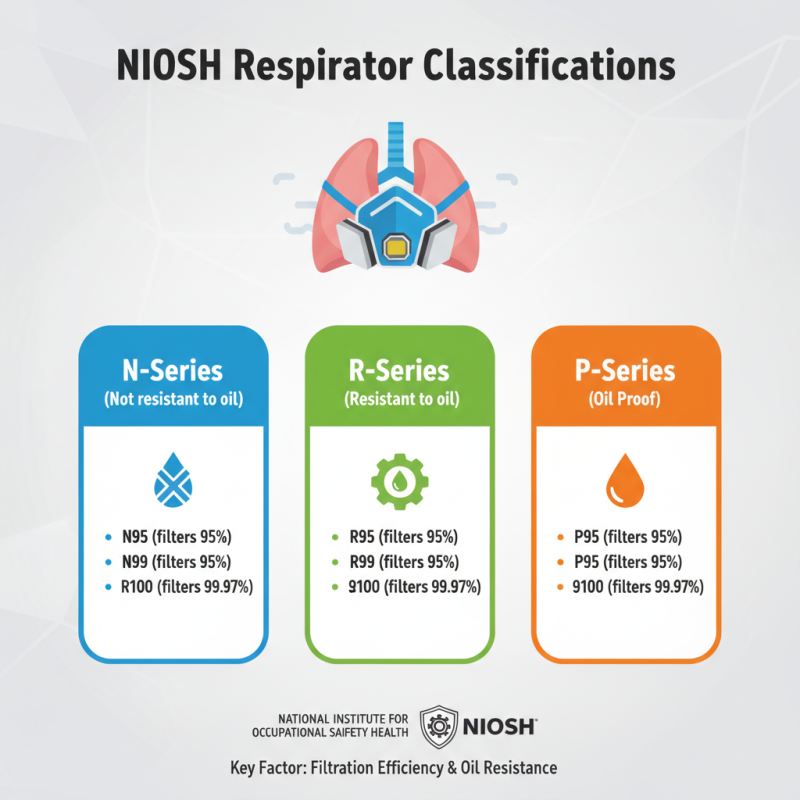
When selecting a dust mask, understanding NIOSH ratings is crucial. These ratings help determine the effectiveness of respirators. NIOSH stands for the National Institute for Occupational Safety and Health. Their certifications classify masks into various categories, such as N95, P95, and R95. Each designation indicates different filtration efficiencies and resistance to oil aerosols.

For example, an N95 mask filters at least 95% of airborne particles. This makes it suitable for various environments, including construction sites and healthcare settings. However, N95 masks are not resistant to oils. In contrast, P95 masks provide oil resistance, making them ideal for work involving oils. Data from the CDC shows that nearly 50% of respirator requirements in industrial settings align with these classifications.

Yet, many users misunderstand these ratings. Some may assume all dust masks are the same, leading to inadequate protection. Research indicates that improper mask selection can lead to respiratory problems. Too often, masks are chosen based on availability rather than specific needs. This can have serious consequences, especially in hazardous environments. Therefore, understanding NIOSH ratings is more than a recommendation; it's essential for safety.

Assessing Your Work Environment: Identifying Specific Dust Hazards

How to Choose the Right Dust Mask for Your Needs?

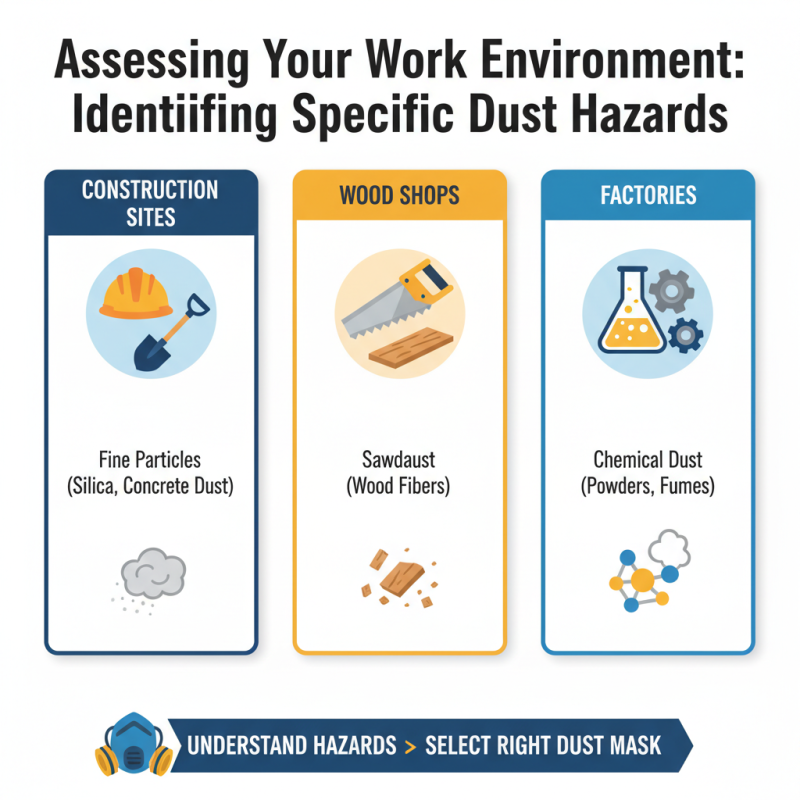
When assessing your work environment, it’s crucial to identify specific dust hazards. Different spaces pose different risks. Construction sites are often filled with fine particles. Wood shops have sawdust, while factories can have chemical dust. Understanding these hazards is essential for selecting the right dust mask.

Next, consider the types of dust prevalent in your area. Are they organic, inorganic, or even toxic? Regular dust may only require basic protection. However, hazardous materials need more robust solutions. Filters with higher ratings can provide necessary safety. Knowing what type you’re dealing with helps eliminate trial and error in your selection process.

Reflect on your personal comfort level too. A mask that fits well and feels breathable is vital. Many people overlook this aspect and face discomfort. A poorly fitting mask can cause avoidance of usage. Take time to find a balance between safety and comfort, ensuring effective protection against dust.

Selecting the Right Dust Mask for Different Applications and Industries

When selecting a dust mask, consider the specific application and industry. Different environments demand different protective levels. In a construction site, for instance, you'll be exposed to larger particles and dust. Choosing a mask with a higher filtration standard is essential. It should have a snug fit to provide adequate coverage.

In industries like woodworking, fine dust particles are common. Here, opting for a mask that targets smaller particulate matter is crucial. Some masks offer replaceable filters, which could be a cost-effective solution for workers. However, many forget to replace filters regularly. Neglecting this can compromise safety.

Artisans in metalworking may face fumes as well as dust. It is important to choose a mask designed to protect against both. Many masks may feel uncomfortable after extended use. Workers sometimes prioritize comfort over protection. This can lead to risks that could have been avoided. Ensuring a balance between comfort, fit, and protection is key to maintaining safety across various industries.

Dust Mask Usage in Different Industries

This bar chart depicts the number of users (in thousands) of dust masks across five different industries: Construction, Manufacturing, Healthcare, Agriculture, and Cleaning. Understanding the demand for dust masks in each sector can help in choosing the right type for specific applications.