[wpml_language_selector_widget]

How to Choose the Right Papr Mask?

Choosing the right papr mask begins with the hazard, not the product label. OSHA’s Respiratory Protection Standard, 29 CFR 1910.134, requires employers to evaluate workplace contaminants, exposure levels, and respirator performance before selection. This matters in welding areas, healthcare rooms, pharmaceutical facilities, and dusty construction zones. A mask that feels comfortable may still provide inadequate protection.

Protection level is a measurable issue. OSHA’s Assigned Protection Factor table lists an APF of 25 for loose-fitting powered air-purifying respirators. Some tight-fitting PAPR configurations may reach an APF of 1,000 when properly selected, fit tested, and supported by manufacturer data. The correct choice depends on the facepiece, filter, airflow, and workplace concentration. More protection is not automatically better.

NIOSH certification provides another essential checkpoint. The NIOSH Certified Equipment List identifies approved respirator configurations, including approved cartridges, filters, batteries, and breathing tubes. Users should verify the complete assembly, rather than trusting a similar-looking model. That small detail is easy to miss.

Real-world experience also matters. A papr mask used for eight hours should balance airflow, noise, battery duration, field of view, and cleaning requirements. Heavy hoods can cause neck fatigue. Poor battery planning can interrupt work. OSHA’s respiratory protection guidance also emphasizes training, maintenance, medical evaluation, and program administration, not merely purchasing equipment.

There is no universal best model. A careful decision considers the contaminant, concentration, required APF, fit, task duration, and worker comfort. Some choices remain uncertain until workplace trials reveal problems. That is why documented risk assessment and review by a qualified safety professional should guide the final selection.
How to Choose the Right Papr Mask?

Define the Hazard: Use OSHA APF Ratings from 25 to 1,000

How to Choose the Right PAPR Mask?

Define the Hazard: Use OSHA APF Ratings from 25 to 1,000

Choosing a powered air-purifying respirator begins with the hazard, not the mask’s appearance. Identify the contaminant, its measured concentration, oxygen level, and whether conditions could become immediately dangerous. OSHA Assigned Protection Factors, or APFs, help estimate expected protection inside the facepiece. A loose-fitting PAPR hood may have an APF of 25. A tight-fitting PAPR commonly reaches 50. Certain full-facepiece PAPRs can reach an APF of 1,000 when program requirements are met.

Use the APF with the applicable occupational exposure limit. For example, a measured concentration of 200 units and an APF of 50 produce an estimated inside concentration of four units. The calculation is useful, but it is not permission to ignore cartridge capacity, airflow, fit, or manufacturer instructions. The maximum use concentration must not exceed the contaminant’s IDLH level or the respirator’s certified limitations.

Details matter.

During a dusty task, a worker may notice airflow weakening before seeing any visible problem. Check the battery, filters, seals, alarms, and airflow before entering the work area. Tight-fitting models require fit testing, while loose-fitting models still need correct sizing and adequate airflow. PAPRs do not supply oxygen and are not automatically suitable for oxygen-deficient or unknown atmospheres. A clean-looking worksite can still contain invisible vapors. Recheck exposure data when materials, temperatures, ventilation, or production steps change. A neat APF number can still mislead.
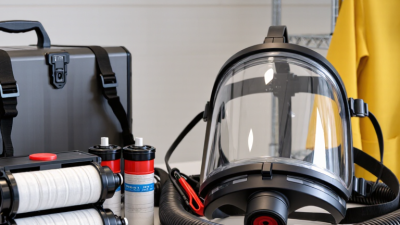

How to Choose the Right PAPR Mask?

Define the hazard first: OSHA Assigned Protection Factors (APFs) estimate how much a properly selected, fitted, and used respirator can reduce exposure to airborne contaminants. Higher APF values indicate a higher level of respiratory protection.

A loose-fitting hood or helmet PAPR has an OSHA APF of 25, a tight-fitting half-mask PAPR has an APF of 50, and a tight-fitting full-facepiece PAPR may have an APF of 1,000 when the applicable quantitative fit-testing requirements are met. Always compare the hazard concentration with the occupational exposure limit and follow OSHA respirator-selection requirements.

Match Filters to Contaminants: NIOSH 95%, 99%, and 99.97% Classes

How to Choose the Right Papr Mask?

Choosing a powered air-purifying respirator begins with identifying the contaminant, not selecting a filter number. NIOSH rates particulate filters at 95%, 99%, or 99.97% minimum efficiency against approximately 0.3-micron test particles. These ratings describe particle capture, not protection from gases, vapors, oxygen deficiency, or unknown atmospheres. A dust cloud may require particulate filtration, while solvent vapor demands an approved chemical cartridge combination. The difference matters.

NIOSH’s Respirator Selection Logic and OSHA’s respiratory protection guidance both emphasize a documented hazard assessment. For many particulate PAPR applications, NIOSH-approved high-efficiency filters provide at least 99.97% efficiency. A 95% filter may be unsuitable for a highly toxic aerosol, even when the air looks clear. A 99% rating offers stronger capture, but it still does not neutralize vapor hazards. Check the contaminant’s safety data sheet, concentration, particle size, and permissible exposure limit before choosing.

Fit and airflow deserve equal attention. NIOSH approval applies to a complete respirator configuration, so mixing unapproved parts can undermine tested performance. Replace filters when airflow drops, alarms activate, or contamination procedures require it. I have seen teams focus on the percentage and overlook the hose, battery, or hood seal. That is an easy mistake. A higher number is not automatically the right answer. Validate the exact approval, filter type, and workplace conditions with a qualified respiratory protection professional.

Select the Facepiece: Compare Loose- and Tight-Fitting PAPR Designs

How to Choose the Right PAPR Mask?
Select the Facepiece: Compare Loose- and Tight-Fitting PAPR Designs

Choosing a PAPR facepiece starts with the work, not personal preference. A loose-fitting hood or helmet covers the head and neck without sealing against the face. It can suit workers with facial hair, glasses, or changing facial features. Airflow usually feels less restrictive. However, movement can affect comfort, and the hood may catch on nearby equipment.

A tight-fitting facepiece seals around the nose, mouth, and eyes. Its protection depends on a proper seal, so fit testing is normally required under applicable workplace rules. Facial hair in the sealing area can cause leakage. That detail is easy to overlook. Workers should also inspect the seal, straps, lenses, and airflow before entering a contaminated area. A mirror helps.

In practical use, loose-fitting designs often feel cooler during long tasks, but they can become warm around the neck. Tight-fitting models may provide a closer, more stable fit during bending or climbing. Yet some users find them tiring after several hours. Check the manufacturer’s instructions, assigned protection factors, battery duration, airflow alarms, and cleaning requirements. Protection levels vary by complete configuration and local regulations. A workplace assessment should consider the hazard, exposure level, heat, communication needs, and emergency movement. Try both designs with the actual helmet, eyewear, and protective clothing. Comfort is useful, but it should never replace verified protection.

Verify Airflow and Battery Life Against Manufacturer Specifications

How to Choose the Right PAPR Mask?

Airflow and battery life should be checked against the manufacturer’s tested specifications, not marketing estimates. The NIOSH respiratory protection standard requires at least 115 L/min for tight-fitting PAPR facepieces and 170 L/min for loose-fitting designs. These figures help confirm that the blower can maintain positive pressure during use. OSHA also lists an assigned protection factor of 25 for loose-fitting PAPRs under suitable conditions. A higher rating does not compensate for poor airflow or an unsuitable fit.

Tips: Request the exact airflow range, test method, and battery runtime at maximum airflow. Check whether runtime was measured with a new filter, a loaded filter, or no filter. A clean laboratory result may not match a warm workshop with a partially blocked filter. Compare the specification with NIOSH certification records and the user manual. Do not rely only on the battery icon.

Battery claims deserve careful attention. Manufacturer figures can change with temperature, airflow setting, filter resistance, and battery age. NIOSH certification information supports equipment verification, while OSHA’s respiratory protection guidance stresses maintenance, inspection, and training. In practical testing, record the start time, airflow setting, filter condition, and shutdown time. My own field notes would not be perfect, especially when workers adjust airflow without recording it. That weakness matters. A model promising twelve hours may deliver less during continuous high-flow use. Verify the result before choosing protection for a full shift.

Confirm NIOSH Approval, Fit, Comfort, and Workplace Compatibility

Choosing the right PAPR mask starts with NIOSH approval. Look for a clear approval label and verify its approval number in the official NIOSH Certified Equipment List. The approval covers a specific configuration, not every similar-looking part. Check the blower, filters, breathing tube, battery, and headpiece together. A mismatched component may reduce protection. This detail is easy to miss.

Fit matters even when the airflow feels strong. A tight-fitting facepiece usually requires fit testing and a clean seal. Facial hair, safety glasses, and movement can affect that seal. Hooded systems may suit workers who struggle with facial sealing, but they can feel warmer and bulkier. Try the equipment before a full shift. Walk, bend, speak, and turn your head. Comfort is not cosmetic; discomfort can cause poor wearing habits.

Tips: Match the PAPR to the hazard, required protection level, and workplace rules. Confirm compatibility with helmets, hearing protection, eye protection, and other PPE. Check battery duration against your longest task, not an ideal laboratory estimate. Ask whether filters need frequent replacement in dusty or chemical environments. Keep training, cleaning, inspection, and emergency procedures practical. I have found that “comfortable enough” is a weak standard. A better question is whether workers can wear it correctly for the entire exposure period. Consult your respiratory protection professional when conditions remain unclear.

How to Choose the Right PAPR Mask? - Confirm NIOSH Approval, Fit, Comfort, and Workplace Compatibility

Evaluation Dimension What to Confirm Typical Technical Information Why It Matters Recommended Selection Practice
NIOSH Approval Verify that the complete respirator configuration is listed in the current NIOSH Certified Equipment List. Look for a NIOSH approval label, approval number, approved components, and the correct configuration of facepiece, blower, filters, cartridges, battery, and breathing tube. Approval applies to the tested configuration. Substituting unapproved components can invalidate the approval and reduce protection. Record the approval number and compare every replacement component with the approved parts list before purchase or use.
Hazard Type Identify whether the hazard is particulate, gas, vapor, biological, radiological, or a combination. Particulate hazards generally require high-efficiency filters; gas and vapor hazards require the specifically approved chemical cartridge; combination hazards require approved combination elements. A particulate filter does not provide protection from gases or vapors, and a chemical cartridge may not provide adequate particulate filtration unless specifically approved. Complete a written hazard assessment and select filters or cartridges based on the contaminant, concentration, oxygen level, and applicable exposure limits.
Facepiece Style Choose between a tight-fitting half or full facepiece and a loose-fitting hood or helmet. Loose-fitting PAPRs generally do not require a fit test; tight-fitting PAPRs require an appropriate fit test before use and at required intervals. The facepiece style affects facial-hair restrictions, eye protection, fit-test requirements, communication, and achievable protection. Use a loose-fitting style when facial hair, glasses, or variable facial dimensions make a tight seal impractical, provided the hazard assessment allows it.
Assigned Protection Factor Confirm that the protection factor is adequate for the measured or anticipated workplace concentration. Under OSHA Table 1, commonly referenced APFs include 25 for loose-fitting PAPR hoods or helmets, 50 for tight-fitting PAPR half masks, and 1,000 for tight-fitting PAPR full facepieces when the applicable conditions are met. The APF helps determine whether the selected respirator can reduce exposure below the applicable occupational exposure limit. Calculate the required APF from the exposure concentration and limit. Do not use an APF beyond the conditions stated by the applicable regulation or program.
Airflow Performance Check the manufacturer’s approved airflow rating, low-flow alarm, and pre-use flow-check procedure. A typical PAPR is designed to provide a continuous flow of filtered air; the exact minimum flow depends on the approved model and configuration. Insufficient airflow can compromise protection and may increase heat, fogging, and breathing discomfort. Use the supplied flow indicator or approved test method before each shift and remove the unit from service if the low-flow alarm activates.
Battery Runtime Match the battery duration to the longest work period, breaks, charging access, and emergency exit needs. Runtime varies with battery condition, airflow setting, filter loading, temperature, and use of gas or vapor cartridges; product-specific runtime must be verified. A depleted battery can stop the blower and interrupt the required continuous airflow. Select a system with documented runtime exceeding the planned shift and maintain charged spare batteries according to the respiratory protection program.
Comfort and Ergonomics Assess weight distribution, heat buildup, noise, breathing-tube routing, visibility, and movement restrictions. Useful comparison points include total worn weight, blower location, adjustable headgear, lens field of view, airflow noise, and compatibility with helmets or hearing protection. Comfort affects user acceptance, concentration, correct wearing time, and the likelihood of removing the respirator in hazardous areas. Conduct a supervised wear trial using representative tasks, clothing, tools, and environmental conditions before deployment.
Workplace Compatibility Check compatibility with hard hats, face shields, goggles, welding equipment, hearing protection, cleanroom garments, and other PPE. Confirm that other PPE does not obstruct the face seal, breathing tube, airflow path, lens, controls, or emergency egress. Interference between PPE can create gaps, reduce visibility, increase snagging hazards, or prevent proper operation. Perform a complete PPE compatibility assessment in the actual work area, including confined spaces, ladders, vehicles, and narrow access points.
Communication and Visibility Evaluate speech clarity, radio use, lens fogging, lighting, peripheral vision, and visual task requirements. Loose-fitting hoods and full facepieces may affect voice transmission and visual communication; approved speech diaphragms or communication accessories may be available for some configurations. Poor communication or restricted visibility can increase operational and emergency-response risks. Test normal and emergency communication methods with the respirator, hearing protection, and workplace alarms in place.
Temperature and Environment Review temperature, humidity, splash, dust loading, corrosive chemicals, explosive atmospheres, and decontamination requirements. Operating limits and cleaning methods are configuration-specific. A standard PAPR must not be assumed to be intrinsically safe or suitable for oxygen-deficient atmospheres. Environmental conditions can damage components, reduce battery performance, or make the respirator unsuitable for the hazard. Confirm environmental ratings and emergency procedures with the safety professional before use in unusual or high-risk conditions.
Maintenance and Cleaning Check filter-change indicators, battery care, inspection steps, cleaning agents, storage conditions, and service intervals. Filters must be changed according to the approved instructions, when damaged or loaded, or when odor breakthrough or cartridge-service-life criteria indicate replacement. Poor maintenance can reduce airflow, damage seals, contaminate the respirator, and compromise protection. Use a documented inspection and maintenance schedule, and keep service records for each assigned unit.
Program and User Requirements Confirm medical evaluation, training, fit testing where required, user seal checks, emergency procedures, and program responsibilities. OSHA respiratory protection programs generally require medical evaluation before required use, training, proper use, cleaning, storage, inspection, and program evaluation. Tight-fitting PAPRs require fit testing; loose-fitting PAPRs generally do not. A technically suitable respirator may still fail if users are not medically cleared, trained, or supported by a written program. Have a qualified respiratory protection professional approve the final selection and document user training, inspections, and periodic program review.

Selection note: A PAPR should be chosen only after a documented workplace hazard assessment. Always follow the current NIOSH approval label, applicable OSHA requirements, and the respirator manufacturer’s approved instructions.