
[wpml_language_selector_widget]

China Top Mens Rain Coat Suppliers for Wholesale Buyers?

For wholesale buyers, choosing a Mens Rain Coat supplier in China takes more than comparing unit prices. The right partner should understand fabric performance, construction details, production planning, and consistent quality. A sleek sample is only a starting point. Ask how the supplier handles seam sealing, zipper protection, lining choices, and inspection records. Request clear specifications before discussing large orders.

Outdoor apparel pioneer Yvon Chouinard wrote, “The more you know, the less you need.” That idea suits rainwear sourcing: precise questions can prevent unnecessary features and costly surprises. Buyers should compare material weight, water-resistance test methods, size grading, minimum order quantities, and sample lead times. Ask for evidence behind performance claims, and confirm whether production samples match the bulk-production specification. Small details matter. A stiff collar or poorly placed pocket can change how a coat feels in real use.

This guide examines China’s Mens Rain Coat suppliers through practical wholesale considerations, including product range, customization, communication, and quality-control processes. It does not treat every supplier as interchangeable. Some may offer strong technical support but limited flexibility; others may welcome customization yet need closer follow-up. That trade-off deserves attention. Supplier information can change, and a polished catalog cannot replace direct verification. Use the outline to build a shortlist, ask focused questions, and judge each supplier against your market, budget, and delivery needs. Even experienced buyers miss things sometimes. A written checklist helps.
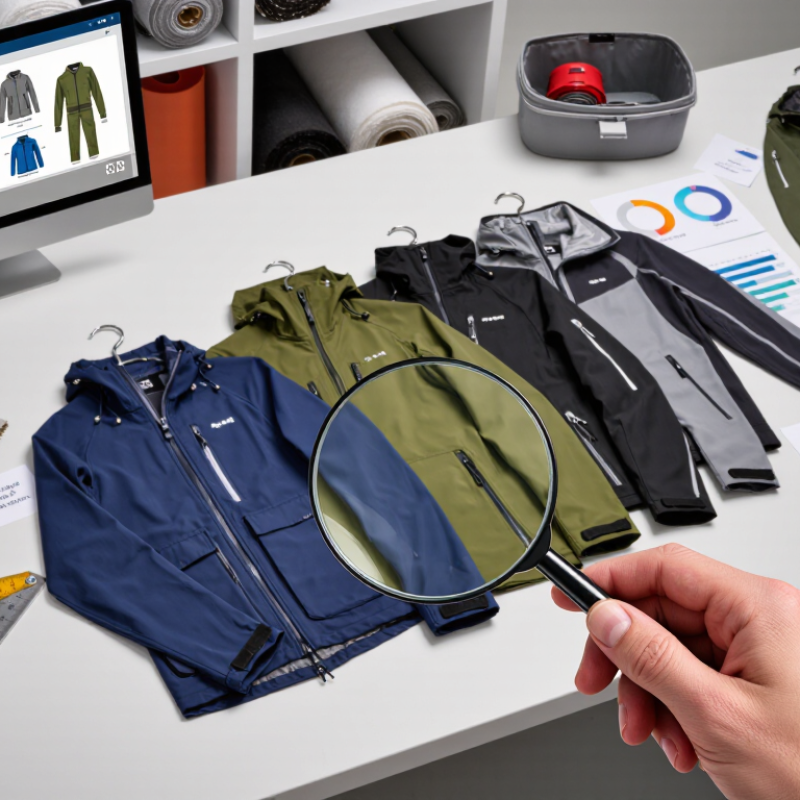
China Top Mens Rain Coat Suppliers for Wholesale Buyers?

China’s Men’s Raincoat Wholesale Market: Products and Manufacturing Overview

China’s men’s raincoat wholesale market covers lightweight packable shells, longer commuter coats, and heavier designs for wet, windy conditions. Common materials include polyester and nylon, sometimes finished with a water-resistant coating. Buyers should distinguish surface beading from reliable protection: sealed seams, storm flaps, and covered zippers can matter more during prolonged rain. Details matter.

Manufacturing typically involves fabric inspection, pattern cutting, stitching, seam treatment, and final checks. Ask suppliers how they control fabric weight, coating consistency, and seam sealing across repeat orders. A sample should be tested with a spray or controlled water exposure, then checked for leakage, fit, and comfort. It is a useful check, not a guarantee of long-term performance.

Wholesale options may include custom colors, reflective trim, adjustable cuffs, and private-label packaging. Minimum order quantities and production schedules vary by supplier, material availability, and customization level. Confirm size measurements in writing; a coat that fits well over a shirt may feel tight over a jacket. Also check whether the hood stays secure in wind and whether the fabric feels clammy after wear. Small flaws can be easy to miss on a polished sample. Requesting a production sample or inspection plan can help, though it adds time and cost.


Key Criteria for Evaluating Chinese Raincoat Suppliers

For wholesale buyers, supplier evaluation should begin with the garment, not the catalogue. Request a sample in the intended fabric, color, and size range. Check hood coverage, cuff adjustment, zipper movement, and seam finishing. Small details matter. Ask for water-resistance test results and the test method used; a headline rating alone is difficult to compare. For taped seams, inspect corners and pocket openings, where lifting or uneven bonding may appear. Request written quality-control procedures and clarify who checks garments before packing. A polished sample is useful, but it does not prove every production unit will match.

Confirm monthly capacity, minimum order quantities, production lead times, and fabric availability in writing. Ask how the supplier handles shade variation, late materials, and defects found during inspection. That is not proof. A factory tour or video can add context, but it cannot replace clear specifications and sample checks. Compare the quoted price with fabric weight, lining, closures, packaging, and inspection costs. Before approving a bulk order, agree on a pre-production sample and a practical inspection plan. Even then, some variation may occur; define acceptable tolerances rather than assuming “consistent quality” means the same thing to both sides.

China Top Mens Rain Coat Suppliers for Wholesale Buyers? - Key Criteria for Evaluating Chinese Raincoat Suppliers

Evaluation Dimension What Wholesale Buyers Should Check Useful Benchmark or Question Evidence to Request Priority
Product specifications Confirm fabric composition, coating or membrane, lining, seam construction, closures, pockets, and size range. Can specifications and tolerances be recorded in a signed purchase order or product specification sheet? Product specification sheet, bill of materials, size chart, and approved reference sample. High
Waterproof performance Check fabric water resistance and whether seams, zippers, and other openings are designed for the intended use. Define the required test method and acceptance level for the product; ISO 811 is one method used to measure hydrostatic resistance of fabrics. Recent test reports for the proposed fabric and, where needed, finished-garment or seam testing. High
Material durability Assess fabric strength, coating or membrane durability, colorfastness, and performance after care or aging tests relevant to the product. Which tests and pass criteria will apply to the actual fabric, color, and finished garment? Test reports with sample identification, test methods, dates, and results. High
Sampling and development Establish the sample process, revision limits, sample charges, and approval responsibilities before bulk production. Is the final pre-production sample made with the intended materials, trims, construction, and labeling? Written sample timeline, sample approval record, and retained approved sample. High
Production capacity and lead time Check available production capacity, seasonal workload, material sourcing time, and the supplier's definition of lead time. Does the quoted schedule distinguish material procurement, production, inspection, and shipment readiness? Order schedule, capacity confirmation, and agreed milestones with delay-notification terms. High
MOQ and price structure Compare minimum order quantity by style, color, and size; identify charges for customization, packaging, and sampling. Is the quotation tied to a stated quantity, specification, currency, validity period, and delivery term? Itemized quotation, MOQ schedule, payment terms, and applicable Incoterms® rule and named place. High
Quality control Review incoming-material checks, in-line inspections, final inspection, defect handling, and lot traceability. Can inspection criteria and acceptable defect limits be agreed before production? Consider independent inspection for higher-risk orders. Quality-control procedure, inspection checklist, corrective-action records, and sample inspection report. High
Regulatory and chemical compliance Identify requirements for the destination market, product category, chemical restrictions, labeling, and packaging. Are the requirements confirmed for the exact market and product? Requirements differ by destination and can change. Relevant, current test reports and declarations matched to the product materials and destination-market requirements. High
Packaging and labeling Confirm care instructions, fiber content, size labels, barcode needs, carton markings, and protection from moisture during transit. Have artwork, label text, carton dimensions, and packing quantities been approved before bulk packing? Approved artwork, packaging specification, and pre-shipment packing photos or inspection records. Medium
Communication and order management Evaluate response clarity, document accuracy, escalation contacts, and willingness to report production or material changes promptly. Can one accountable contact provide written updates against agreed milestones? Written communication trail, order confirmation, change-control process, and shipment documents. Medium
Supplier verification Verify the legal contracting entity, business scope, manufacturing or sourcing role, and the consistency of company documents. Does the contracting party match the entity receiving payment and issuing commercial documents? Clarify any subcontracting. Business registration details, contract, bank beneficiary information, and disclosed production-site information. High

Note: MOQ, pricing, production capacity, and lead time vary by product specification, order quantity, season, and supplier. Treat quoted values as order-specific and confirm them in writing.

Leading Supplier Types and Their Manufacturing Capabilities

China’s raincoat supply base includes cut-and-sew factories, material specialists, and trading companies with partner workshops. Factory-direct suppliers may control pattern making, seam taping, and quality checks. Material specialists focus on coated polyester, nylon, or laminated fabrics. Trading companies can combine smaller production lines, but buyers should confirm who handles inspection and repairs.

China’s National Bureau of Statistics reported 19.39 billion garments produced by large-scale enterprises in 2023. This figure covers apparel generally, not raincoats, so it is a scale indicator—not proof of rainwear capacity. Ask suppliers for sample test records, production-line photos, and measurable details: hydrostatic-head results, seam-sealing methods, and hourly output. A taped seam should look smooth, not puckered.

One caution: a large factory is not automatically a better partner. Capability claims need checking.

Tips: Request a pre-production sample in your intended fabric and inspect the hood, cuffs, zipper cover, and taped seams after a controlled water test. Confirm whether stated capacity includes other orders. Small details get missed. I would also ask how rejected pieces are recorded; some suppliers may have room to improve their reporting.

Wholesale Pricing, Minimum Orders, and Customization Options

China-based mens rain coat suppliers often set wholesale prices according to fabric, lining, trims, and order volume. A lightweight coated shell may cost less than a lined coat with taped seams and a storm flap. Ask for tiered quotes at several quantities, such as 300, 800, and 1,500 pieces. Details matter. Confirm whether prices include packaging, labels, sample fees, and shipping to your destination.

Minimum orders vary by factory and material. Some suppliers accept smaller runs when using stocked fabric, while custom colors may require more units. Request the minimum for each color and size range in writing. Before approving bulk production, review a sample in daylight and check the zipper, hood adjustment, and seam finish. A glossy sample can still mislead. Try it under a shower, too.

Customization may include fabric weight, color, lining, pocket layout, reflective details, and private labels. Send a clear measurement chart and reference photos; vague instructions can create costly revisions. Ask which changes affect the minimum order or production time. If you are still testing demand, keep the first order simpler. Custom cuffs sound useful, but they may add another fit issue to inspect.

Supplier Verification, Sampling, and Shipping for Wholesale Buyers

For wholesale raincoat orders, supplier verification should go beyond a polished product page. Ask for the factory’s business details, production capacity, and recent experience with similar garments. Request clear specifications for fabric composition, waterproof rating, seam construction, zippers, and size grading. Check whether the supplier can provide consistent records for these details. A video call can help you inspect the cutting area, sewing lines, and finished goods, though it cannot replace an independent audit. Small clues matter.

Sampling is where specifications meet real use. Order samples in more than one size and test them in steady rain, not just under a tap. Check whether water passes through seams, whether the hood stays in place, and whether the fabric feels too heavy when wet. Ask for a pre-production sample that matches the materials and trims planned for bulk production. Keep written notes and dated photos. One sample may look excellent while a later batch differs; this is a risk worth discussing before payment terms are agreed.

Before shipping, confirm carton counts, garment labels, packing method, and the inspection date in writing. A third-party inspection can check measurements, stitching, and random pieces from packed cartons. Compare shipping options by total cost, transit estimate, and cargo protection, rather than price alone. Leave time for corrections. Schedules slip sometimes, and a spreadsheet will not fix that. Good communication helps, but it should not replace documented checks.

Article Source: