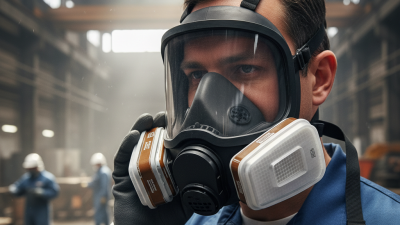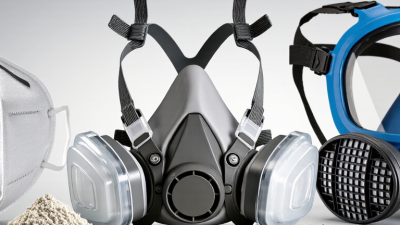
Choosing the right China air filter mask manufacturer requires more than comparing unit prices. Global buyers need dependable protection, stable production, and clear technical evidence. This guide examines manufacturers through practical purchasing concerns, including filtration performance, fit, breathability, materials, packaging, and export support.
A credible supplier should provide current product specifications, test reports, quality certificates, and batch traceability. Buyers should check whether testing covers the intended market and product category. Requirements may differ between regions, so one certificate does not automatically prove universal compliance. Ask for samples before placing large orders. Inspect the nose clip, elastic tension, weld points, and inner fabric. Small details matter.
Factory experience also deserves close attention. Look for documented quality-control procedures, trained production staff, clean workshops, and consistent inspection records. A useful supplier can explain how defective masks are isolated and how production changes are recorded. Communication matters too. Delayed answers may become delayed shipments.
No manufacturer is perfect. Samples can perform well while later batches vary, especially when specifications are unclear. This risk deserves honest discussion. Buyers should confirm minimum order quantities, lead times, customization limits, shipping terms, and after-sales procedures in writing. Price alone can mislead.
This introduction provides a practical framework for comparing China’s leading manufacturers for global purchasing projects. It focuses on evidence, usability, and long-term reliability, helping buyers make decisions with greater confidence and fewer costly surprises.

Chinese manufacturers produce several air filter mask types for different exposure levels and working conditions. Disposable particulate respirators are common for dust, haze, and construction environments. Their layered melt-blown filter media can target fine particles, but filtration depends heavily on facial fit. NIOSH classifies N95 respirators as filtering at least 95% of airborne particles under laboratory conditions. Fit matters. A loose nose bridge can reduce real protection sharply.
Reusable half-face masks use replaceable particle or gas cartridges. Some factories also produce full-face designs, which add eye protection against irritating particles. Activated-carbon filters can reduce certain odors and vapors, although they are not universal gas protection. Powered air-purifying respirators provide filtered airflow through a battery-powered unit. They may suit longer industrial shifts, but battery life, airflow alarms, and cleaning procedures require careful verification. Chinese production lines also make lightweight ear-loop masks for daily urban pollution, though these should not be treated like certified workplace respirators.
The World Health Organization reported in its 2021 Global Air Quality Guidelines that 99% of the global population lived where guideline pollution levels were not met in 2019. That figure explains demand, but it does not prove every mask performs equally. Buyers should request test reports, material specifications, breathing resistance data, and lot traceability. A neat product photo proves little. Some catalog claims remain too broad, especially around “PM2.5 protection.” Independent testing and documented certification should guide purchasing decisions.

Types of Air Filter Masks Made by Chinese Manufacturers
The chart compares the minimum particle-filtration benchmarks specified by widely used respirator standards. N95 and KN95 require at least 95% filtration, FFP2 requires at least 94%, and FFP3 requires at least 99% under their respective test methods. Actual protection depends on product certification, fit, leakage control, and correct use.
Chinese air filter masks are designed around real breathing conditions. Manufacturers typically assess filtration media, airflow resistance, face seal, and comfort together. A high filter rating means little if air leaks around the nose. Engineers may use layered nonwoven materials, shaped nose bridges, and adjustable straps. Some models use replaceable components, while others have sealed structures. Choices depend on dust exposure, climate, work duration, and cleaning practices. Fit is personal. Facial shapes vary widely.
During production, incoming materials are checked before cutting and forming. Factories monitor layer alignment, ultrasonic welding, strap strength, and dimensional consistency. Sampling may include filtration efficiency, breathing resistance, fit-related checks, and cleanliness testing where applicable. Trained operators inspect edges, seams, and attachment points. Automatic lines improve repeatability, but human checks still catch folded media or weak straps. Small defects matter. Production records should connect each batch with raw materials and inspection results.
For global buyers, dependable sourcing requires more than attractive samples. Ask for test reports, technical specifications, material declarations, packaging details, and production tolerances. Independent verification can help confirm performance claims before large orders. Manufacturers should explain storage limits and intended use honestly. No mask fits every user or environment. Even a well-made product may feel hot during long shifts or seal poorly on some faces. That limitation deserves attention, not polished marketing language. I would review fit trials, batch consistency, and complaint handling before approving a supplier. A factory that documents problems may be more reliable than one claiming perfection.
China-made air filter masks should be judged by evidence, not factory photos or attractive packaging. Quality begins with controlled materials, stable production, and repeatable testing. Buyers should request the applicable standard for the intended market. They should also confirm filtration efficiency, breathing resistance, leakage, and flammability results. These figures matter during long shifts, dusty transport routes, and crowded indoor workspaces.
A reliable manufacturer can provide batch records, raw-material details, inspection dates, and laboratory reports. Independent testing adds confidence, especially when results match the production lot. Check whether the mask keeps its shape during movement and whether straps remain secure. A perfect laboratory number means little if the seal feels loose. I have seen samples pass visual checks but fail practical fit tests. That gap deserves attention. Packaging should show clear instructions, storage limits, and traceable production information. Some suppliers may offer documents slowly. That is not automatically disqualifying, but it requires careful review.
Tips: Ask for recent reports, not generic templates. Test several sizes on real users. Compare comfort after two hours. Inspect odor, stitching, nose-wire strength, and valve design where relevant. Keep retained samples for future comparison. Do not treat one successful shipment as permanent proof; materials and processes can change. Recheck quality regularly, and record every concern before approving repeat orders.
| Quality Dimension | Reference Standard | Typical Requirement or Classification | Recommended Verification Data | Buyer Acceptance Guidance |
|---|---|---|---|---|
| Particle Filtration Efficiency | GB 2626-2019 Respiratory protective equipment |
KN95 respirators are classified for a minimum particle filtration efficiency of 95% under the applicable test conditions. | Obtain a valid test report identifying the exact model, filter class, test aerosol, airflow rate, laboratory and test date. | Confirm that the report model number, product construction and filter class match the goods supplied for production. |
| European Filtration Classes | EN 149:2001+A1:2009 | FFP1: minimum filtration efficiency of 80%; FFP2: 94%; FFP3: 99%, subject to the standard test method. | Request test results for filtration efficiency, breathing resistance and total inward leakage. | Do not treat KN95 and FFP2 as automatically interchangeable; verify the applicable regulatory and test requirements for the destination market. |
| United States Benchmark | NIOSH 42 CFR Part 84 | N95 filtering facepiece respirators are rated at a minimum 95% filtration efficiency against the relevant test aerosol and are not oil-resistant. | For products marketed as NIOSH-approved, verify the approval number and official approval listing rather than relying only on a supplier certificate. | Use the N95 designation only when the product has the required NIOSH approval; a KN95 or FFP2 report alone is not equivalent approval. |
| Total Inward Leakage | EN 149 or the applicable national standard | Measures inward leakage caused by filter penetration, face-seal leakage and valve leakage where applicable. | Review test results for each size and configuration, including the number of test subjects and individual results. | Prioritize fit performance as well as filter media performance, because a high-efficiency filter cannot compensate for a poor face seal. |
| Breathing Resistance | GB 2626-2019, EN 149 or destination-market standard | Resistance must remain within the limits specified by the selected standard at the required airflow and test condition. | Request inhalation and exhalation resistance data for new and, where applicable, used or loaded filters. | Compare results with the exact standard and product type; do not compare values from different test methods without technical review. |
| Material Safety | REACH Regulation (EC) No. 1907/2006 for EU-market products; applicable local chemical regulations elsewhere | Materials and substances must meet the chemical restrictions applicable to the intended market. | Request material declarations, restricted-substance testing and supporting documentation for nonwoven fabric, elastic, nose clip, adhesive and printing ink. | Check that declarations cover all components, not only the primary filter layer. |
| Skin Contact and Irritation Control | Applicable product-safety and textile requirements in the destination market | Materials should be suitable for intended skin contact and free from avoidable sharp edges, loose fibers and irritating residues. | Review skin-contact material specifications, odor assessment, colorfastness where relevant and complaint records. | Conduct incoming inspection and wear trials using the final production materials, packaging and labeling. |
| Fit and Dimensions | Product specification approved by the buyer; relevant requirements from GB 2626 or EN 149 | Critical dimensions should remain within approved tolerances for length, width, fold position, nose-clip placement and ear-loop attachment. | Use an approved technical drawing, sample measurement report and lot-based dimensional inspection plan. | Define tolerances before mass production and verify fit on the intended user population and face-size range. |
| Strap and Attachment Strength | Applicable respiratory-protection standard and approved product specification | Ear loops, headbands, welds and attachment points should remain secure during donning, removal and normal use. | Request production-line pull-test records and perform independent sampling tests on finished goods. | Inspect both attachment strength and comfort; excessive tension can reduce wear compliance even when the attachment is strong. |
| Flammability | Applicable requirement of the selected market standard | Materials and finished respirators must meet the flammability criteria specified by the relevant certification or regulatory framework. | Obtain a test report for the finished configuration, including outer layer, filter layers, straps and valves if present. | Ensure the tested configuration is identical to the production configuration, including colorants and surface treatments. |
| Production Consistency | ISO 9001 quality-management principles; buyer-approved quality plan | Critical parameters should be controlled through documented procedures, equipment calibration, batch identification and traceability. | Audit production records, calibration certificates, incoming-material records, in-process checks and finished-product inspection reports. | Require lot numbers and retain samples so filtration, fit and material issues can be traced back to a specific production batch. |
| Packaging and Shelf Life | Applicable labeling and packaging rules in the destination market | Packaging should protect the masks from moisture, dust, deformation and contamination throughout storage and transport. | Verify manufacture date, expiration or use-by date where required, storage conditions, lot number, quantity and packaging integrity. | Confirm that shelf-life claims are supported by the manufacturer’s documented stability or material-aging evaluation. |
| Labeling and User Instructions | GB 2626-2019, EN 149, NIOSH or other applicable market requirements | Labels and instructions should identify the product type, standard or approval reference, limitations, fitting method and use instructions as required. | Review artwork against the final test report, certification documents and destination-market language requirements. | Never approve packaging that claims a certification, approval or equivalence not supported by the applicable authority or test documentation. |
| Independent Pre-Shipment Inspection | Buyer-approved inspection plan based on ISO 2859-1 or another agreed sampling procedure | Inspection may cover appearance, dimensions, packaging, labeling, quantity, workmanship and selected functional tests. | Specify inspection level, acceptable quality limit, defect classification, sample size and release criteria before production begins. | Use independent inspection for new suppliers, new tooling, new materials or any change to the approved product specification. |
Global buyers evaluate Chinese air filter mask manufacturers through evidence, not attractive quotations alone. They examine filtration performance, breathing resistance, leakage control, and material consistency. A credible manufacturer should provide recent laboratory reports, production records, and clear explanations of test methods. Buyers should verify whether reports match the exact mask model, not a similar sample.
Factory experience matters during supplier assessment. Buyers often inspect melt-blown material storage, automated production lines, sealing quality, and packaging areas. They may request samples from different production batches. Small details reveal discipline, such as uniform ear-loop strength and readable lot codes. A supplier that answers technical questions precisely shows stronger professional knowledge.
Quality systems also deserve careful review. Buyers can check documented inspections, worker training, complaint handling, and corrective actions. Independent audits add authority, but no audit is perfect. A factory may perform well during one visit and struggle during peak demand. This is easy to overlook. Reliable cooperation requires clear specifications, sample approval, production monitoring, and shipment checks. Buyers should also discuss communication speed, replacement procedures, and evidence for every performance claim. The cheapest offer is not always the safest decision. Sometimes, paying slightly more protects consistency, user comfort, and long-term supply planning.
For global buyers, selecting an air filter mask manufacturer requires more than comparing prices. The 2024 IQAir World Air Quality Report assessed air quality across 138 countries and territories. Only 17% met the World Health Organization’s annual PM2.5 guideline. This pressure increases demand, but demand alone does not prove supplier quality.
Export readiness should include stable production, accurate customs documents, and test reports matching the destination market. Ask for batch records, material specifications, and laboratory reports before placing a large order. Standards such as EN 149, ASTM F2100, and ISO 16890 may apply differently, depending on product type and country. A supplier offering customization should explain filtration performance, breathing resistance, fit testing, packaging, and minimum order quantities. A printed logo is simple. A reliable redesign is not.
Tips: Request three recent production samples. Compare seal quality, strap strength, odor, and packaging labels. Confirm whether testing covers the finished product, not only the filter material. Check audit dates and laboratory accreditation. Also review export experience for your target region. The World Bank’s Logistics Performance Index 2023 shows major differences in customs efficiency and shipment reliability between markets. That matters when delivery windows are tight.
A lower quotation can hide higher inspection costs. I have seen buyers focus on unit price and overlook replacement tooling or retesting fees. That decision deserves reconsideration. Supplier selection should balance evidence, communication speed, customization control, and after-sales traceability. Some manufacturers appear technically capable but respond poorly when specifications change. That weakness often becomes expensive later.