[wpml_language_selector_widget]

Why Choose a PAPR Mask for Workplace Safety?

A papr mask can make demanding work safer when airborne hazards require dependable respiratory protection and the task calls for a powered airflow system. Its blower draws air through compatible filters and delivers it to a hood, helmet, or facepiece. On a noisy production floor, that airflow may feel steady against the face; during a long shift, the reduced breathing resistance can matter. Still, a PAPR is not a shortcut around hazard assessment, training, or maintenance.

Respiratory-protection expert Dr. Lisa Brosseau has emphasized that respirators must be selected and used within a complete protection program. To avoid presenting an unverified sentence as her exact words, this guide paraphrases that principle: a PAPR protects only when its equipment, filters, fit, and use match the workplace hazard. The details count. A depleted battery, blocked inlet, or poorly chosen filter can undermine confidence at the wrong moment.

This outline examines when a papr mask may suit workplace conditions, what features deserve attention, and how employers can support safe use. It also recognizes a practical limitation: powered equipment adds weight, noise, and charging needs. Those trade-offs are easy to overlook. Check current manufacturer instructions and applicable occupational guidance before choosing a model.
Why Choose a PAPR Mask for Workplace Safety?

What Is a PAPR Mask and How Does It Work?

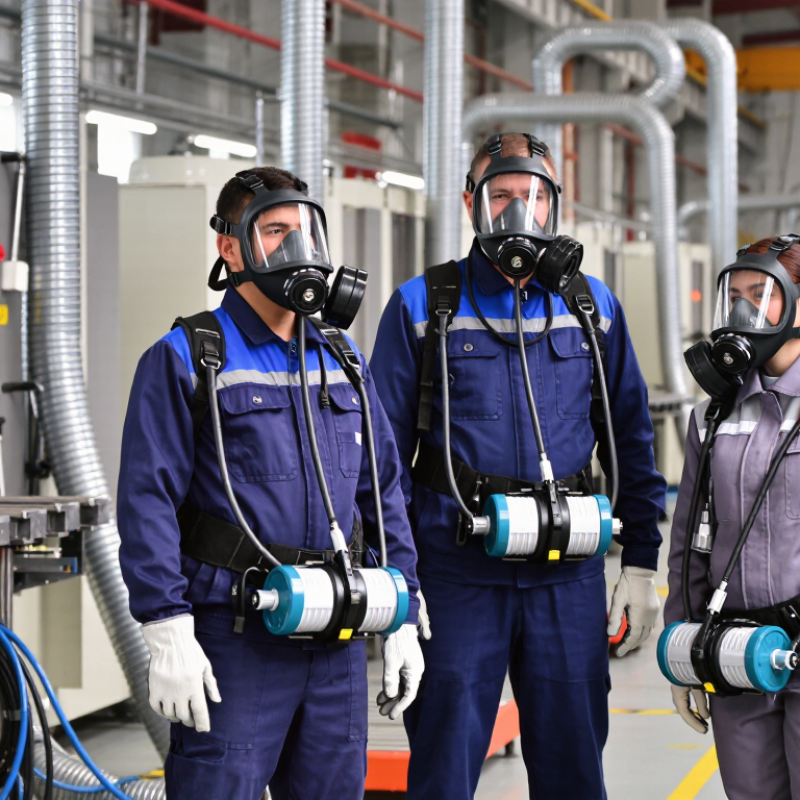
A powered air-purifying respirator, or PAPR, uses a battery-powered blower to pull workplace air through filters. The blower then sends cleaned air into a hood, helmet, or facepiece. A steady airflow can reduce breathing resistance during long shifts. It also helps limit exposure to airborne particles, certain gases, or vapors, depending on the approved filter system. A PAPR is not an oxygen source. It must never be used in oxygen-deficient or immediately dangerous atmospheres unless specifically designed and approved for that purpose.

Workers may choose a PAPR when tasks create dust, chemical mist, or infectious aerosols. The airflow can feel cooler and less restrictive than a tight-fitting respirator. A loose-fitting hood may also help workers with facial hair, but workplace rules still matter. The protection depends on correct filters, battery power, airflow checks, and proper maintenance. A clogged filter may make the blower work harder. A weak battery can reduce protection. These details are easy to overlook. Real workplace experience shows that comfort improves compliance, but comfort alone proves nothing.

Tips: Complete a hazard assessment before selecting equipment. Check the filter label and service life. Inspect the hood, hose, seals, and battery before each use. Keep the airflow path clear. Train users to recognize alarms and leave the area if airflow stops. Follow the manufacturer’s instructions and local occupational safety requirements. Even experienced workers should review the procedure after changes in materials, ventilation, or job conditions.


How PAPR Masks Protect Workers From Airborne Hazards

A powered air-purifying respirator (PAPR) draws contaminated air through a selected filter and delivers it to a hood or facepiece. This steady airflow can help reduce inward leakage when workers move, bend, or spend long shifts near airborne particles. Think of a sanding station: fine dust hangs in the light, while a properly selected PAPR keeps filtered air flowing around the wearer’s breathing zone. Airflow matters. But a PAPR does not protect against every gas or vapor; the filter or cartridge must match the identified hazard.

Protection levels depend on the respirator’s design and correct use. OSHA’s respiratory-protection standard assigns an assigned protection factor of 25 to a loose-fitting PAPR hood or helmet. That figure applies within an effective respiratory-protection program, not as a promise for every task. Fit still matters, as do battery charge, airflow checks, clean filters, and training. A low-flow alarm should never be ignored. NIOSH-approved equipment and a documented hazard assessment help employers make a defensible selection. Even then, real workplaces are messy: dust loads change, and workers may forget checks when production is rushed. That is worth reflecting on. A PAPR is a tool, not a substitute for controlling airborne hazards at their source.

Key Benefits of Choosing a PAPR for Workplace Safety

A powered air-purifying respirator (PAPR) uses a battery-powered blower to move filtered air into a hood or facepiece. During a long shift, that steady airflow may feel easier to breathe through than a tight-fitting respirator, especially during physical work. The hood can also cover the head and face, adding practical protection where splash or particle exposure is a concern. Fit still matters.

OSHA’s Respiratory Protection standard, 29 CFR 1910.134, Table 1, assigns loose-fitting PAPR hoods an assigned protection factor (APF) of 25. Tight-fitting PAPRs have an APF of 50; qualifying hood or helmet systems may receive an APF of 1,000 when the manufacturer provides supporting evidence. These figures are not guarantees. The right model, working airflow, filter choice, maintenance, and worker training all affect protection. Check the blower before a dusty task, and keep a charging plan for the next shift. That routine takes time, and a PAPR can be heavier or noisier than expected. Those trade-offs deserve a real workplace trial, not just a specification-sheet comparison.

Workplace Conditions Suited to PAPR Respiratory Protection

Why Choose a PAPR Mask for Workplace Safety?

Workplace Conditions Suited to PAPR Respiratory Protection

A powered air-purifying respirator (PAPR) can suit jobs where airborne contaminants are identified and exposure levels remain within the equipment’s protection limits. Its battery-powered blower draws air through filters and delivers it to a hood, helmet, or facepiece. This airflow can feel more comfortable during long shifts or physically demanding work. Think of dusty sanding, certain manufacturing tasks, or work with irritating particles—only after a competent assessment confirms the filter and respirator are appropriate.

PAPRs may also help workers who struggle with tight-fitting respirators, but not every model offers the same protection. Loose-fitting hoods can have different fit requirements than tight-fitting facepieces. Check the hazard, concentration, filter type, airflow, battery status, and manufacturer instructions before use. PAPRs do not supply oxygen. They are not suitable for oxygen-deficient or immediately dangerous environments unless the specific equipment is designed and approved for that use. Comfort matters, but it cannot replace hazard controls.

Tips: Inspect the hood, hose, seals, and battery before each shift. Keep a spare charged battery nearby when downtime matters. Stop work if airflow drops or an alarm sounds. Small details get missed on busy days; build checks into the routine and report problems promptly.

How to Select, Use, and Maintain a PAPR Mask

Why Choose a PAPR Mask for Workplace Safety?

Selecting a powered air-purifying respirator begins with a documented hazard assessment. Identify dust, aerosols, gases, vapors, oxygen levels, and exposure duration. OSHA’s Assigned Protection Factor table rates PAPR protection from 25 to 1,000, depending on the facepiece design. Higher protection is not automatic. It requires the correct configuration, approved filters, and suitable workplace procedures. NIOSH’s national respirator-use survey estimated that about five million U.S. workers used respirators. That number shows how important correct selection remains.

Choose a loose-fitting hood when facial hair or frequent movement makes a tight seal unreliable. Choose a tight-fitting mask only after medical evaluation and fit testing, as required by OSHA 29 CFR 1910.134. Check airflow before entering the work area. A weak battery, blocked filter, or silent alarm can create dangerous confidence. I would not assume a comfortable mask is a protective mask. Inspect the visor, hose, seals, straps, battery, and airflow indicator every shift. Clean and disinfect reusable parts after use. Replace filters according to the hazard assessment and written schedule, not simply when breathing feels difficult.

Tips: Keep a charged spare battery available. Store the unit in a clean, dry cabinet. Never modify components. Record inspections, cleaning, filter changes, and training dates. NIOSH approval labels and the manufacturer’s instructions should match the complete assembly. Small shortcuts matter. They can undermine a well-designed respiratory program.

Why Choose a PAPR Mask for Workplace Safety? - How to Select, Use, and Maintain a PAPR Mask

Decision or Safety Area What to Check Practical Guidance Verification or Frequency
Respirator selection Identify the contaminant, concentration, oxygen level, and exposure duration. Select a PAPR only after completing a workplace hazard assessment. Match the filter or cartridge to the specific hazard. Review the assessment whenever materials, processes, controls, or exposure conditions change.
Particulate hazards Dust, mist, fume, smoke, bioaerosols, or other airborne particles. Use a particulate filter approved for the hazard and confirm that the filter class is suitable for the contaminant. Replace the filter when damaged, visibly contaminated, difficult to breathe through, or according to the written program.
Gas and vapor hazards The chemical identity, concentration, warning properties, and cartridge compatibility. Use cartridges or canisters specifically approved for the identified gas or vapor. Particulate filters alone do not provide gas or vapor protection. Use a documented change schedule based on service-life information; do not rely only on odor as a replacement indicator.
Oxygen and immediately dangerous atmospheres Whether the atmosphere may be oxygen-deficient, unknown, or immediately dangerous to life or health. Do not use a standard air-purifying PAPR in oxygen-deficient or unknown atmospheres. Use equipment specifically approved for the identified emergency condition. Confirm atmospheric testing and the respirator’s approval limitations before entry.
Assigned protection factor The required protection level compared with the respirator’s assigned protection factor. Under the OSHA APF table, loose-fitting PAPRs are generally assigned an APF of 25. Tight-fitting PAPR values depend on the facepiece and fit-testing conditions. A qualified respiratory program administrator should confirm that the selected APF is adequate for the measured exposure.
Facepiece and fit Whether the worker needs a loose-fitting hood, helmet, or a tight-fitting facepiece. Loose-fitting designs may accommodate facial hair in the sealing area, while tight-fitting designs require an effective seal and fit testing. Conduct required fit testing before use and repeat it when the model, size, or facial condition changes.
Medical evaluation The worker’s ability to safely wear and use a powered respirator. Complete a medical evaluation before the worker is required to use a respirator, as required by the applicable workplace program. Re-evaluate when health status, work conditions, or respirator use creates a new medical concern.
Battery readiness Charge level, battery condition, expected operating time, and charging compatibility. Begin work with a fully charged, approved battery. Carry out the task only when the battery can support the planned work period. Check before every shift and replace batteries that fail inspection, no longer hold adequate charge, or reach the manufacturer’s service limit.
Airflow check The blower’s airflow indicator, alarm, hose connection, and breathing tube condition. Perform the equipment’s required airflow or low-flow check before use. Do not use the unit if the alarm activates or airflow is below the specified level. Check before each use and after filter, battery, hose, or facepiece changes.
Putting on and removing Correct assembly, hose routing, facepiece position, and seal or neck coverage. Follow the written procedure and training. Avoid disconnecting the airflow system in a contaminated area unless the procedure specifically permits it. Inspect and perform a user seal check when applicable each time the respirator is donned.
Cleaning and disinfection Sweat, dust, biological material, chemical residue, and shared-use requirements. Clean and disinfect reusable components using procedures and solutions that will not damage the equipment. Do not immerse electrical components unless approved. Clean after each use or shift, and immediately when contamination is suspected.
Inspection and repair Cracks, tears, worn seals, damaged straps, blocked openings, loose connections, and alarm function. Remove defective equipment from service. Repairs should use approved parts and be completed by qualified personnel. Inspect before each use and during scheduled program inspections.
Storage Protection from dust, sunlight, moisture, extreme temperatures, chemicals, and deformation. Store the respirator clean and dry in a way that prevents crushing, contamination, and damage to the facepiece or breathing tube. Check storage conditions during routine inspections and after transport.
Training and records Worker knowledge of hazards, limitations, donning, checks, cleaning, alarms, and emergency procedures. Provide training before use and whenever equipment, hazards, procedures, or worker performance indicates a need for retraining. Maintain medical evaluations, fit-test records where required, training records, inspections, maintenance, and filter-change documentation.

Note: Respirator selection and use must follow the applicable occupational safety regulations, the equipment approval limitations, and the employer’s written respiratory protection program.