[wpml_language_selector_widget]

7 Best Hazmat Masks for Industrial Safety

Industrial work can expose people to dust, fumes, chemical vapors, or biological hazards. The right hazmat mask helps reduce exposure when selected for the specific risk. But no single mask protects against everything.

This guide explores seven options for industrial safety. It focuses on practical details: respirator type, compatible filters or cartridges, facepiece materials, visibility, and comfort during extended wear. A clear visor matters when reading equipment gauges. A secure seal matters even more.

Fit is personal. Facial hair, eyewear, and the shape of a worker’s face can affect the seal. A mask that feels comfortable in a brief trial may become difficult to wear through a full shift. That part is easy to overlook.

Product descriptions alone cannot confirm that a respirator is suitable for a particular workplace. Check the manufacturer’s instructions and the hazard assessment before choosing a model. Fit testing, training, maintenance, and proper storage also matter. Replace filters or cartridges as directed, not simply when they look dirty.

The selections below are intended as a starting point for comparing features, not as a substitute for professional safety guidance. Some options may suit certain tasks better than others. That is the point. A dependable hazmat mask should match the exposure, the wearer, and the work being done.
7 Best Hazmat Masks for Industrial Safety

Hazmat Mask Classes and NIOSH Approval Under 42 CFR Part 84

“Hazmat mask” is a broad description, not a single NIOSH class. Under 42 CFR Part 84, NIOSH evaluates respirators against defined performance requirements. Look for the approval label and complete model information. Check the label. Approval applies to a specific respirator configuration, not every mask that looks similar.

For particulate filters, N, R, and P indicate resistance to oil, while 95, 99, and 100 indicate filtration efficiency under prescribed testing. These ratings do not identify protection against every gas or vapor. Chemical cartridges are selected for particular hazards, and combination filters address more than one contaminant type. The right choice depends on the substance, its concentration, and workplace conditions. A dusty loading bay and a solvent-cleaning station need different assessments.

Fit matters. A tight-fitting respirator needs a proper fit test and a user seal check each time it is worn. Facial hair can disrupt the seal. Air-purifying respirators also cannot supply oxygen, so they are unsuitable for oxygen-deficient environments. I would not choose by rating alone; labels and selection charts can still be confusing. Confirm the approval details, hazard assessment, and replacement schedule with a qualified safety professional.


Compare OSHA Assigned Protection Factors: 10, 50, and 10,000

An Assigned Protection Factor (APF) estimates how much a respirator can reduce exposure when properly selected and used. OSHA’s Respiratory Protection Standard, Table 1, assigns an APF of 10 to qualifying half-mask air-purifying respirators and 50 to qualifying full-face models. A pressure-demand, full-face SCBA can have an APF of 10,000, but OSHA allows that value only when the employer demonstrates the required performance. Otherwise, its APF is 1,000. A bigger number is not a shortcut.

For example, if a contaminant’s exposure limit is 5 ppm, an APF of 10 gives a calculated maximum use concentration of 50 ppm; an APF of 50 gives 250 ppm. These calculations do not override OSHA’s limits, including conditions that are immediately dangerous to life or health. Check the exact contaminant, concentration, oxygen level, and respirator configuration. NIOSH’s Respirator Selection Logic also emphasizes matching equipment to the hazard, not choosing by APF alone. Fit testing matters. So do medical clearance, training, and a written respiratory-protection program under OSHA 29 CFR 1910.134. A face seal can leak around stubble; even a high rating cannot fix that.

Evaluate P100 Filters at NIOSH’s 99.97% Particle Efficiency Standard

A P100 filter is rated to capture at least 99.97% of test particles under NIOSH certification conditions. That figure matters when selecting protection for fine dust, metal fumes, or other airborne particles. But it describes filter performance, not the protection a wearer will necessarily receive. Face-seal leaks, damaged parts, and poor maintenance can reduce real-world protection. Nor does P100 alone remove gases or vapors.

Tips: Check the respirator’s NIOSH approval label and use only compatible P100 filters. Complete fit testing, inspect the seal each time, and replace filters when damaged, wet, or difficult to breathe through. Keep it simple.

For industrial work, match the complete respirator to a documented hazard assessment. A particulate filter may suit one task and prove inadequate for another. Follow the manufacturer’s instructions and workplace procedures; facial hair at the sealing surface can disrupt fit. The percentage sounds exact, yet job conditions are messy: heat, movement, and long shifts all matter. Treat the number as a starting point, not a shortcut.

Compare Seven Industrial Mask Types by Hazard and Protection Needs

7 Best Hazmat Masks for Industrial Safety
Compare Seven Industrial Mask Types by Hazard and Protection Needs

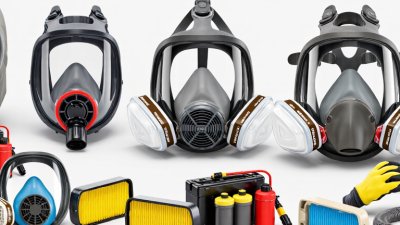
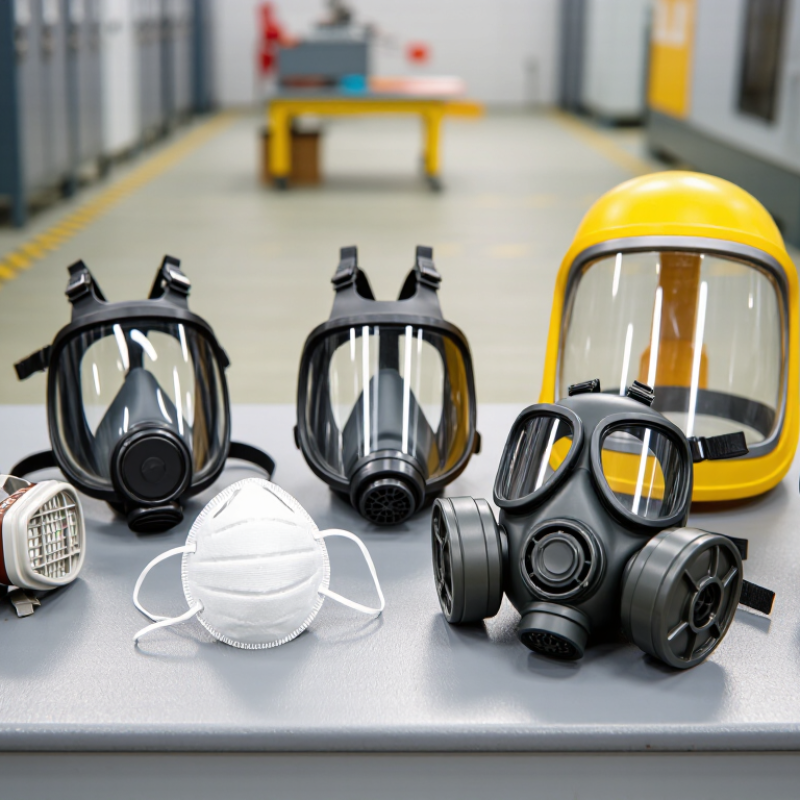
Industrial respiratory protection is not one-size-fits-all. Disposable N95 filtering facepieces suit many airborne particles, while P100 filters provide at least 99.97% filtration under NIOSH test conditions. Neither protects against gases or vapors. Not for every hazard. Reusable elastomeric half-mask respirators accept particulate filters or hazard-specific cartridges; full-face versions also protect the eyes and face. Cartridge choice must match the contaminant and exposure conditions.

For greater breathing comfort during long tasks, powered air-purifying respirators move filtered air through a hood or facepiece. Supplied-air respirators deliver breathing air through a hose, but limit movement and depend on a safe air source. Self-contained breathing apparatus carries its own air supply and is used for oxygen-deficient or immediately dangerous environments by trained workers. These are not interchangeable options. A small leak can change the protection offered.

OSHA’s respiratory-protection standard, Table 1, lists assigned protection factors of 10 for half-mask air-purifying respirators and 50 for full-facepiece air-purifying respirators. Those values assume a compliant respiratory program and proper fit; they are not guarantees for every workplace. NIOSH certification, medical evaluation, fit testing, and a written hazard assessment matter. Dust on a sleeve is easy to notice; an odorless vapor may not be. Reassess the selection when materials or processes change.

7 Best Hazmat Masks for Industrial Safety — Compare Seven Industrial Mask Types by Hazard and Protection Needs
Respirator Type Typical Protection Common Industrial Uses Key Limitations Best Suited For
N95 Filtering Facepiece Respirator Filters at least 95% of airborne particles when properly fitted. N-class filters are not oil-resistant. Dust, some non-oil aerosols, and certain particles generated during routine industrial tasks. Does not protect against gases, vapors, oxygen deficiency, or unknown concentrations. A poor face seal can significantly reduce protection. Low-hazard particulate exposure when a disposable, fit-tested respirator is appropriate.
Elastomeric Half-Mask with Particulate Filters Reusable facepiece with replaceable filters. P100 filters are tested to provide at least 99.97% filtration efficiency for airborne particles. Dust, fumes, and other particle hazards when the selected filter is suitable for the contaminant. Particulate filters do not remove gases or vapors. The mask does not cover the eyes and requires a tight face seal. Recurring particulate work where a reusable facepiece and replaceable filters are practical.
Elastomeric Half-Mask with Chemical Cartridges Uses cartridges selected for specific gases or vapors; combination cartridges can also include particulate filtration. Known chemical-vapor or gas exposures, such as certain solvent tasks, when the cartridge is approved for the contaminant. Protection depends on correct cartridge selection, service-life limits, concentration, and a proper fit. Does not protect the eyes or supply oxygen. Identified chemical hazards within the respirator and cartridge’s approved use conditions.
Full-Face Air-Purifying Respirator Uses suitable particulate filters, chemical cartridges, or combination cartridges, while also covering the eyes and face. Selected particle, gas, or vapor hazards where eye protection is also needed and the atmosphere is suitable for air-purifying equipment. Does not supply oxygen and must not be used in oxygen-deficient, immediately dangerous to life or health (IDLH), or unknown atmospheres. Known, controlled hazards that require respiratory and eye protection in one tight-fitting facepiece.
Powered Air-Purifying Respirator (PAPR) A battery-powered blower moves air through selected filters or cartridges to a hood, helmet, or facepiece. Protection varies by approved configuration. Tasks involving particles or specified gases and vapors where a compatible PAPR configuration is approved. Does not create oxygen or make an unsuitable atmosphere safe. Battery charge, airflow, filter selection, and equipment configuration matter. Work where a powered system or a loose-fitting hood is preferred, provided the hazard assessment permits a PAPR.
Supplied-Air Respirator (SAR) Delivers breathable air from a remote source through a hose to a facepiece, hood, or helmet. Long-duration work or certain high-contaminant tasks when a compliant air source and suitable system are available. Air supply and hose integrity are critical; a standard airline system is not suitable for IDLH entry unless specifically configured and approved with an appropriate escape system. Known hazards where filtered ambient air is inadequate and a reliable supplied-air system can be maintained.
Self-Contained Breathing Apparatus (SCBA) Carries its own breathable-air supply; positive-pressure SCBA is used for IDLH conditions when approved and operated under the applicable requirements. Emergency response, unknown atmospheres, oxygen-deficient environments, and other tasks requiring an independent air supply. Air duration is limited by the cylinder and work rate. SCBA use requires specialized training, inspection, and emergency procedures. Qualified responders or workers facing IDLH, unknown, or oxygen-deficient atmospheres.
Important safety note: No respirator is suitable for every hazard. Select equipment through a site-specific hazard assessment and follow applicable regulations, manufacturer instructions, and respirator-program requirements. Tight-fitting respirators require medical evaluation and fit testing. Air-purifying respirators must not be used in oxygen-deficient, IDLH, or unknown atmospheres.

Check OSHA Fit Testing, Cartridge Selection, and Replacement Requirements

A respirator is only protective when it fits the worker and matches the hazard. OSHA’s respiratory protection standard requires fit testing before initial use, at least annually, and whenever a different facepiece is used. Retesting is also required after physical changes that could affect fit. Facial hair under the sealing surface can break the seal. Small details matter.

Cartridge choice starts with the contaminant, its concentration, and the task. Check the safety data sheet and workplace exposure assessment; a cartridge suitable for one vapor may not protect against another. OSHA’s assigned protection factor table lists 10 for a half-mask air-purifying respirator and 50 for a full-facepiece model, when used within the standard’s conditions. These figures are not a substitute for selecting the right respirator or checking exposure limits. Fit testing confirms the facepiece seal, not the cartridge’s suitability.

Set a written replacement schedule using objective data, manufacturer service-life information, or an end-of-service-life indicator where available. OSHA does not treat odor as a dependable universal warning; some contaminants have weak or unreliable warning properties. Replace damaged parts promptly. Keep fit-test records and cartridge-change dates where crews can find them. The schedule may feel overly cautious. Recheck it when tasks, temperatures, or concentrations change.

7 Best Hazmat Masks for Industrial Safety

OSHA Assigned Protection Factors (APFs) by respirator type — higher APFs indicate a higher expected level of respiratory protection when the respirator is properly selected and used.

APFs are not a stand-alone measure of suitability: selection depends on the hazard, exposure level, and workplace conditions. OSHA requires fit testing before initial use, at least annually, and when the facepiece changes. Replace cartridges using an end-of-service-life indicator or an objective change schedule—there is no universal replacement interval.